
In 1965, the BBC made an unprecedented move: a First Doctor story without William Hartnell, his companions or even the TARDIS – and not a single frame of footage survives…
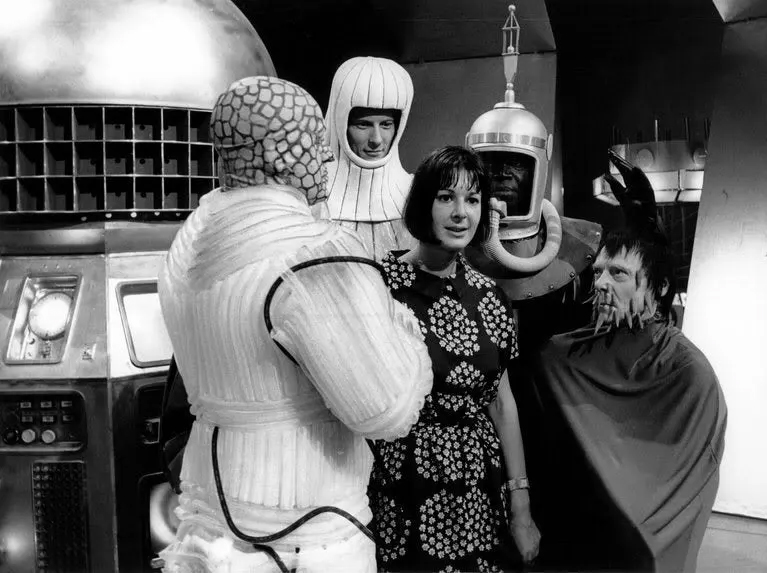
We are of course referring to the infamously titled ‘Dalek Cutaway,’ or ‘Mission to the Unknown’ to be precise. This was a standalone First Doctor story which centred around a stricken group of space agents bogged down on the planet Kembel, under attack by some cactus-like flora, and some little green blobs in bonded polycarbide armour.
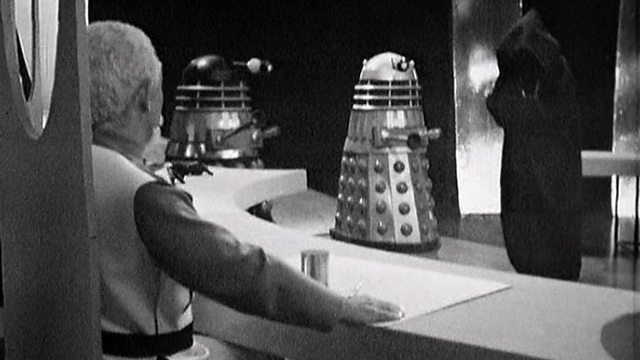
Specifically, this was a Dalek story without the TARDIS team – a prequel to the epic ‘Daleks’ Master Plan‘ that would follow five weeks later, spanning a dizzying 12 parts. Whether or not it truly counts as part of the longer tale remains a source of debate, although the two stories have traditionally been released together in print and on audio.
You will notice that we didn’t mention DVD versions. As many of you know, this First Doctor story is sadly missing from the BBC archives, with paperwork suggesting it was destroyed in the early 70s. There is an unverified rumour that ‘Mission to the Known’ was bundled into a large collection of prints sent to Singapore, and there is no record of its destruction, meaning that it could still exist somewhere. And as we have seen from recent Doctor Who discoveries, the most unlikely of episodes can turn up in the strangest of places, so there’s every chance we could see this unusual First Doctor story again someday.
But why was it made in the first place? Why did the BBC forge ahead with a standalone adventure, omitting the entirety of the regular cast and even the TARDIS? Was this a bold piece of televisual experimentation? Or was this First Doctor story borne out of contractual necessity?
Well, it depends how you look at it. A story from the previous season (‘Planet of Giants’) was curtailed from four episodes to three, meaning that viewers were robbed of an entire Doctor Who episode (it doesn’t bear thinking about!) Did the production team have a contractual obligation to make up the numbers? Quite possibly, although this wouldn’t explain why all the regulars were missing; surely they had their contractual obligations too?
Interestingly, William Hartnell is the only member of the TARDIS team to feature on the episode’s credits, despite never appearing. This was stipulated in his contract; he would be credited for every episode of his era, regardless of whether he put in an appearance or not.






When you consider all the behind-the-scenes machinations, it’s easy to take a cynical view about this First Doctor story. But it would be unfair to suggest that there was no creative rationale behind ‘Mission to the Unknown.’ It was written by Terry Nation, after all – one of the script masters of Doctor Who, and the creator of the iconic Daleks.
At this point in his career, Nation was riding a wave of success. His mutated creations had become famous the world over, and as Nation owned the copyright to the Daleks, he had his sights set on giving them their own series, possibly State-side. This obscure First Doctor story gave him an opportunity to make a prototype. And even though his plans for a Dalek spin-off never came to fruition, we do get a tantalising glimpse into ‘what might have been’ with ‘Mission to the Unknown.’
We mentioned before that this First Doctor story focuses on a group of space agents. According to legend, Terry Nation actually based the episode’s protagonist Marc Cory on James Bond, so it’s possible that he envisaged his standalone Dalek series as ‘secret agents in space.’ Which would have been epic.
One must also be fair to the outgoing producer Verity Lambert, who commissioned this story and its 12 part successor. This was a grand vision, and Lambert was nothing if not experimental. Doctor Who had never done a standalone episode without any of its regulars before; perhaps she had her sights set on expanding the Whoniverse.
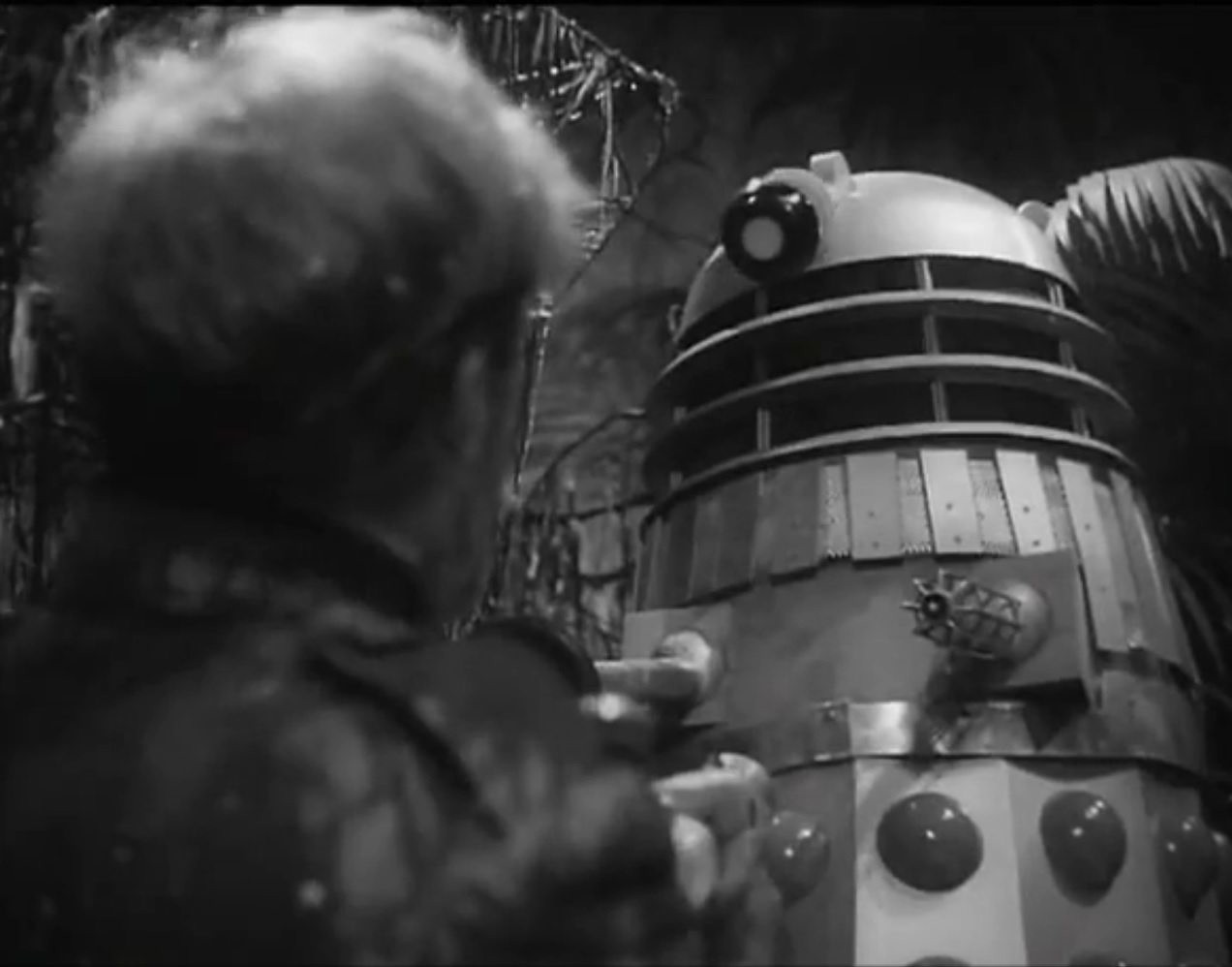
But the the big question is this: Is ‘Mission to the Unknown’ actually any good? Well, it’s hard to say without seeing it. This First Doctor story has the unfortunate accolade of being one of only two Hartnell adventures without any surviving telesnaps or clips (the other being ‘The Massacre.’) So we really only have the soundtrack to go on. Of course, the surviving episodes of ‘The Daleks’ Master Plan’ help to an extent, and Marc Cory even puts in an appearance in its opening part – albeit as a charred cadaver.
However, we do have an unofficial animation from Doctor Who superfan Ian Levine, although this is tucked away in his private collection and isn’t publicly available. You might have to ask him very nicely if you want to see it.
More excitingly, though, is the live action version. Believe it or not, this First Doctor story was remade from the ground up by a group of students from the University of Central Lancashire in 2019. It was endorsed by Marc Cory actor Edward de Souza, companion Peter Purves, and even the BBC itself, who released it on their official YouTube channel. The recreation closely followed the surviving reference material and strove to recreate, as accurately as possible, this long-lost First Doctor classic.
It’s well worth a watch, and at the time of writing it is arguably the best way to experience ‘Mission to the Unknown.’ The team went to great lengths to match the style and production methods of the mid 60s, and their rendition of the prickly Varga plants is second-to-none. When the real ‘Mission to the Unknown’ finally returns to the archives (yes, we’re optimists) it will be interesting to see how this First Doctor recreation compares to the real deal.
Overall, ‘Mission to the Unknown’ might be something of an obscurity, but it deserves to be recognised for daring to be different, even if it was largely rejected by the overseas broadcasters. Doctor Who was at the peak of its popularity in 1965, and the BBC did not play it safe; they took a gamble, with no idea if it would pay off. This First Doctor story should be applauded for its boldness.
So how do you feel about ‘Mission to the Unknown’? Was it a success, or a successful failure? Let us know in the comments below.


Leave a Reply