
‘Aliens of London’ was political, lavatorial and laugh-out-loud funny, if you have a fondness for flatulence. So how does this two-parter fare, some 20 years after transmission?
‘Aliens of London’ and ‘World War Three’ is an important milestone in New Who, being the first multi-episode adventure since 1989 and hastening the return of UNIT, last seen in Ben Aaronovitch’s ‘Battlefield.’ It also marks a turning point in the Ninth Doctor’s relationship with Rose, and is one of the few stories that explores the consequences of a human companion abandoning her family for an adventure in space and time.
And as the title suggests, ‘Aliens of London’ is about precisely that: aliens. In London. Undoubtedly, this two-part invasion story had some big shoes to fill, with so many classic adventures preceding it; how could writer Russell T Davies top the Cybermen bursting out of the London sewers and marching past St Paul’s Cathedral? Or the Daleks performing Nazi salutes as they swarmed Trafalgar Square?
Well, ‘Aliens of London’ does have one such moment – the scene in which an out-of-control spaceship slams into Big Ben before plunging into the Thames. This moment was used heavily in the story’s promotion, and it looks great; but sadly it’s probably not the first thing that comes to mind when people think about ‘Aliens of London.’
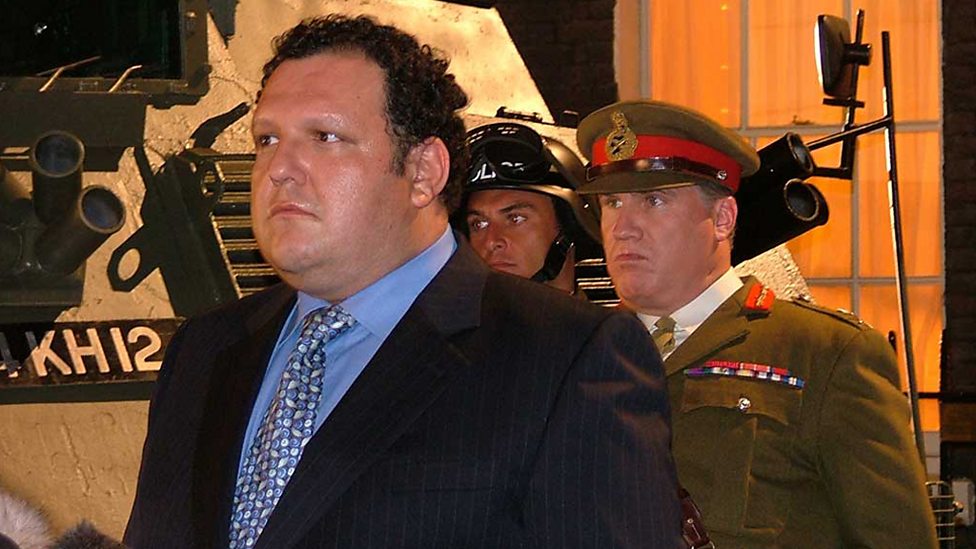
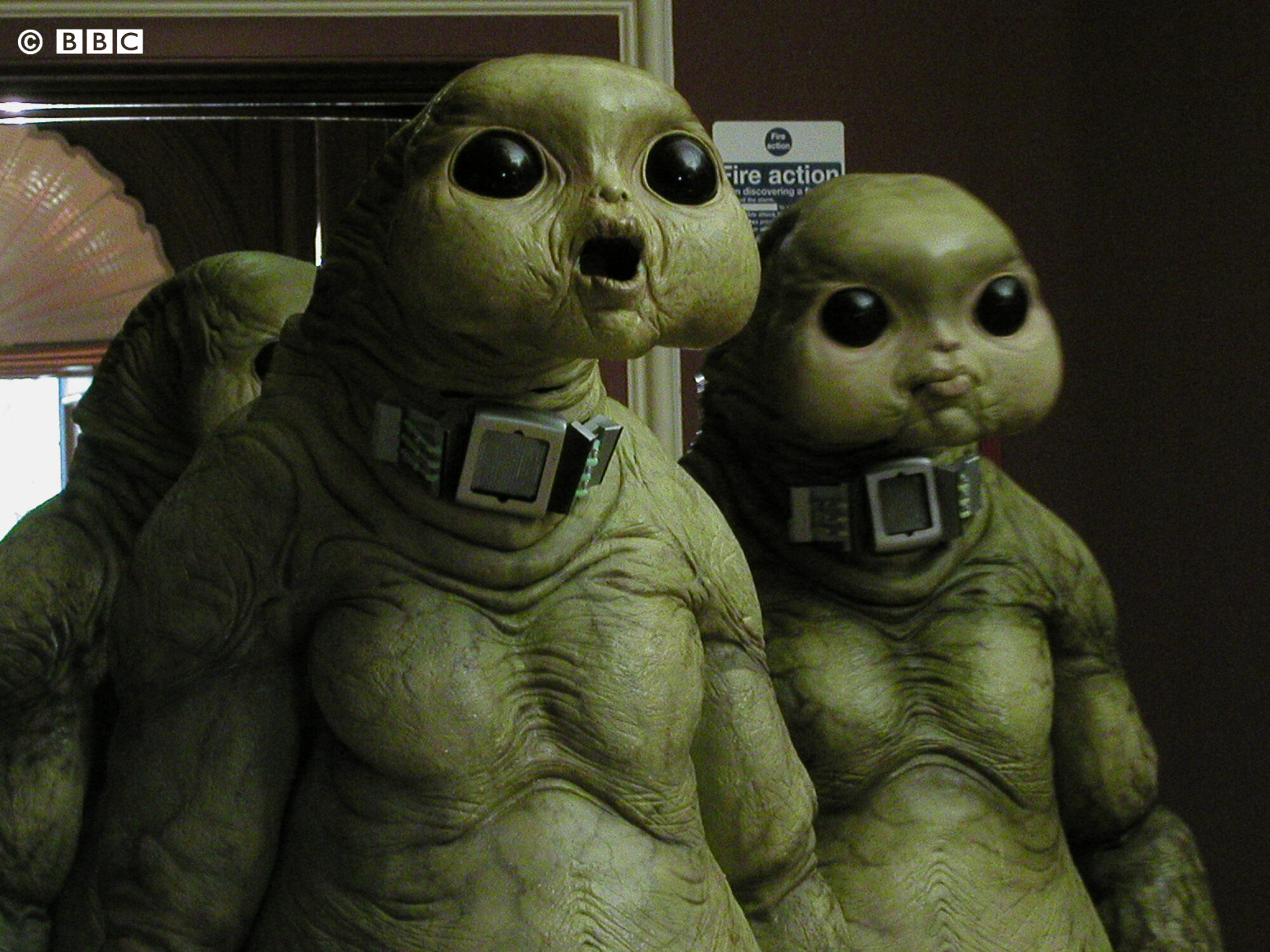
So, let’s address the alien in the skin suit: ‘Aliens of London’ is about farting monsters. Truly – they give themselves away by farting. The rationale behind this idea is that the Raxacoricofallapatorians (specifically, the Slitheen family) are rather rotund, and zip themselves inside costumes fashioned from human flesh to avoid detection. The unfortunate side-effect of this compression is “the gas exchange,” which causes them to fart, rather loudly – a consequence of the pressure build-up.
And so, as with most farting, it’s rooted in science. But is it necessary? Did Russell T Davies write himself into a position where his creations would have to fart repeatedly if his story were to make any kind of sense?
Arguably not. We British love our toilet humour, and the inclusion of the sundry lavatorial tones is undoubtedly for comic effect. And comedy, as we all know, is highly subjective; sorry to dump that one on you.
Now, Russell T Davies has never explicitly stated that he included the farting to please the younger viewers, but this was likely his intention with ‘Aliens of London.’ And certainly, the younger viewers flocked to the programme, but whether this was down to the Slitheen and their pungent gas exchange is hard to prove. It’s worth noting, though, that the Raxacoricofallapatorians never returned to Doctor Who, at least not as a ‘monster of the week.’ It’s also worth noting that the modern series never revisited this particular brand of humour.
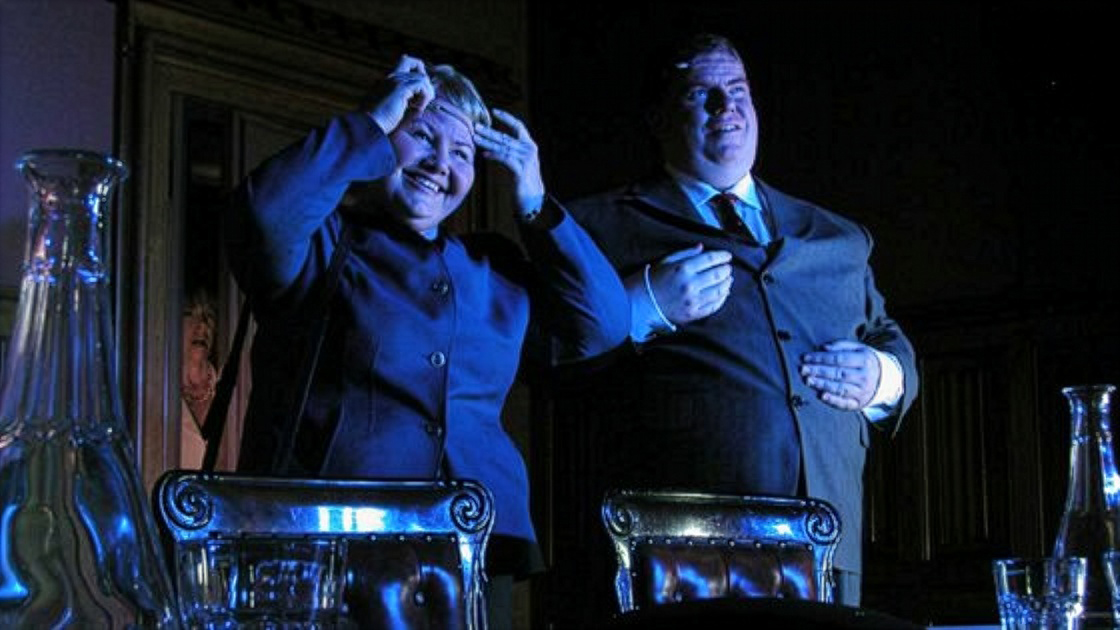
Controversies aside, the concept of the Slitheen made for a great cliffhanger. ‘Aliens of London’ ends with one of the Raxacoricofallapatorians unzipping themselves in Jackie Tyler’s flat, as the lights flare and the hapless mother screams at the top of her lungs. It’s evocative of some of the greatest Doctor Who cliffhangers of the past, and indeed in a press interview, Davies admitted that one of his favourite classic moments was the ending to ‘Terror of the Vervoids’ part one. It’s very similar, and that’s a good thing.
But why is Jackie Tyler’s flat plunged into darkness at the critical moment? No one knows, and no one cares – it looks great.






A plot point that did raise eyebrows, however, is the Slitheen’s mission. Their goal is to trick the governments of the world into a nuclear war by claiming that they have detected “massive weapons of destruction” in orbit around the Earth. This is a clear reference to the Labour government of the time, who justified their invasion of Iraq by claiming that its then-leader possessed “weapons of mass destruction” that could be deployed within 45 minutes. Rightly or wrongly, Davies took a candid and unapologetic swipe at Tony Blair’s administration.
Was this wise? It’s hard to say. Whenever a writer makes a choice like this, it’s going to stir-up a certain amount of discourse. Audiences criticised ‘Aliens of London’ at the time, and they might criticise it today for the same reason. Others might applaud it for its gumption in challenging a government that had made a questionable decision. Either way, it raises questions about Doctor Who which remains relevant today: Is the show political? Should it be political? Has it always been political?
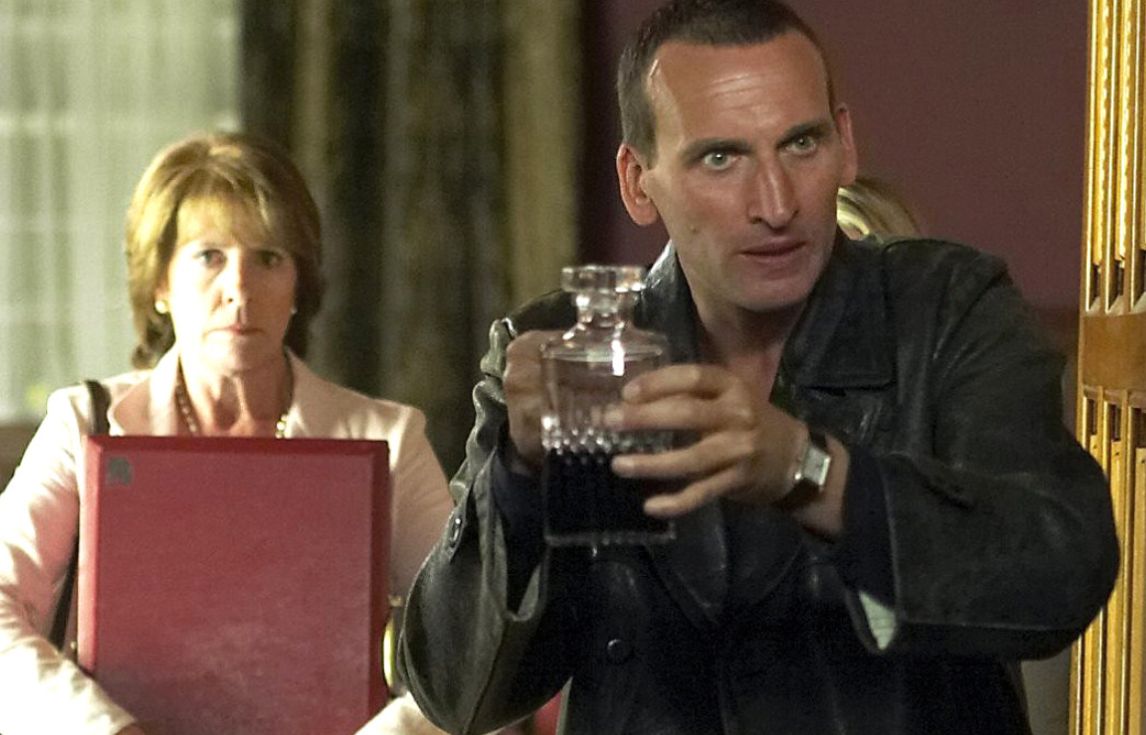
Interestingly, ‘Aliens of London’ makes a true hero out of one of its politicians, and we all know who she is – Harriet Jones, MP for Flydale North, portrayed by Penelope Wilton. Certainly, no one could accuse Russell T Davies of being wholly against the Labour government, as this character was based on one of their own MPs – Harriet Harman. In ‘Aliens of London,’ Harriet Jones is the beating heart. As the Doctor later notes: “We were trapped in Downing Street and the one thing that scared you wasn’t the aliens, it wasn’t the war… It was the thought of your mother being on her own.” Simply put, this is a story about aliens and humans, and Harriet Jones is the most human of them all.
If we could sum up what ‘Aliens of London’ is best remembered for, then, it’s probably this: the introduction of Harriet Jones, and the farting monsters. Harriet Jones was beloved. The farting monsters… never returned. But the story did give us one of the series’ most memorable lines, uttered by the Ninth Doctor himself: “Excuse me, would you mind not farting when I’m saving the world?” They would, apparently.
So tell us, internet: how do you feel about this controversial two-parter, some 20 years after its transmission? Is it one of the greats of the Eccleston era, or does it leave a long, lingering smell? Let us know in the comments below.


Leave a Reply