
What, exactly, makes Doctor Who scary? Because it was never meant to be – not in the beginning, anyway. And yet the series’ themes, stories and monsters have been the cause of many a sleepless night…
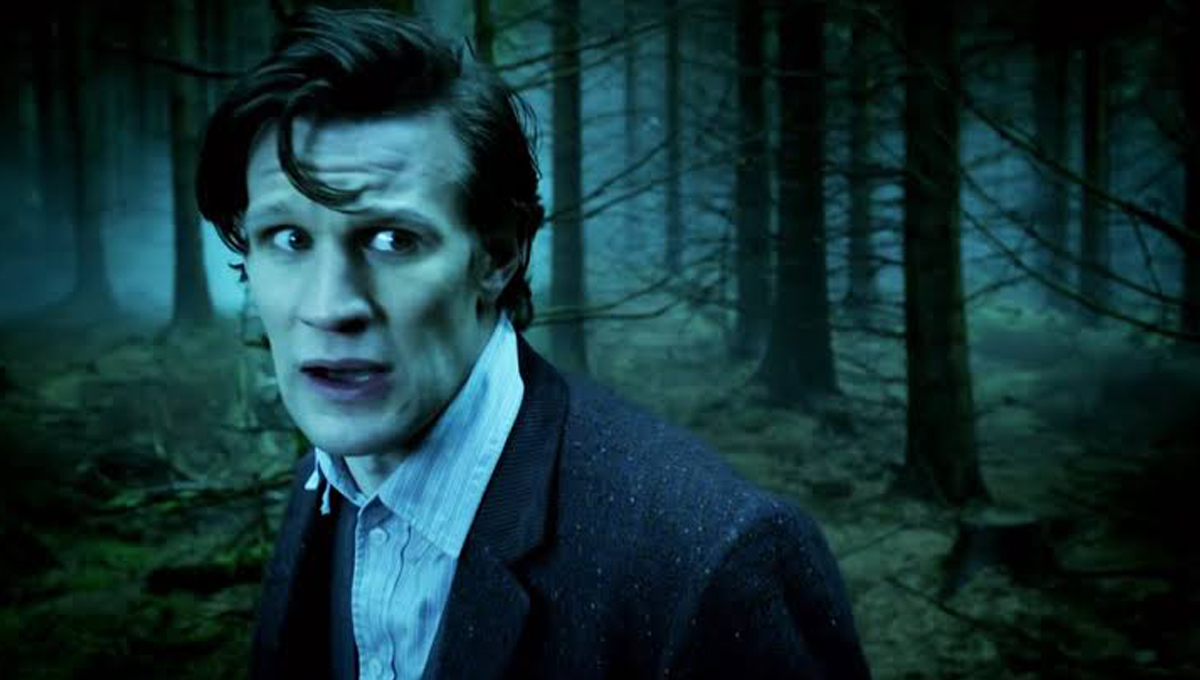
Perhaps one of the most famous answers to this question comes from the Doctor himself – or rather, the actor who played him. Reflecting on what makes Doctor Who scary, Jon Pertwee is quoted as saying, “There’s nothing more scary than coming home and finding a Yeti on your loo in Tooting Bec.”
Translated, he means the horrors of the everyday – when unearthly terrors impinge on things that we wouldn’t normally consider threatening, like toilets, or Tooting Bec. The fact that a killer robot has suddenly burst into our home and commandeered the commode is blindsiding, and begs the question: If my toilet isn’t safe, what is?
Undoubtedly, this is one of the key factors in determining what makes Doctor Who scary, and it’s something the programme does so well. One of the most famous examples is the Autons – a form of living plastic that terrorised the streets of London in 1970’s ‘Spearhead From Space.’ On the surface, they were just normal shop window dummies – until they broke free of their displays and began shooting innocent shoppers. This is one of the most chilling and iconic scenes of Classic Who.
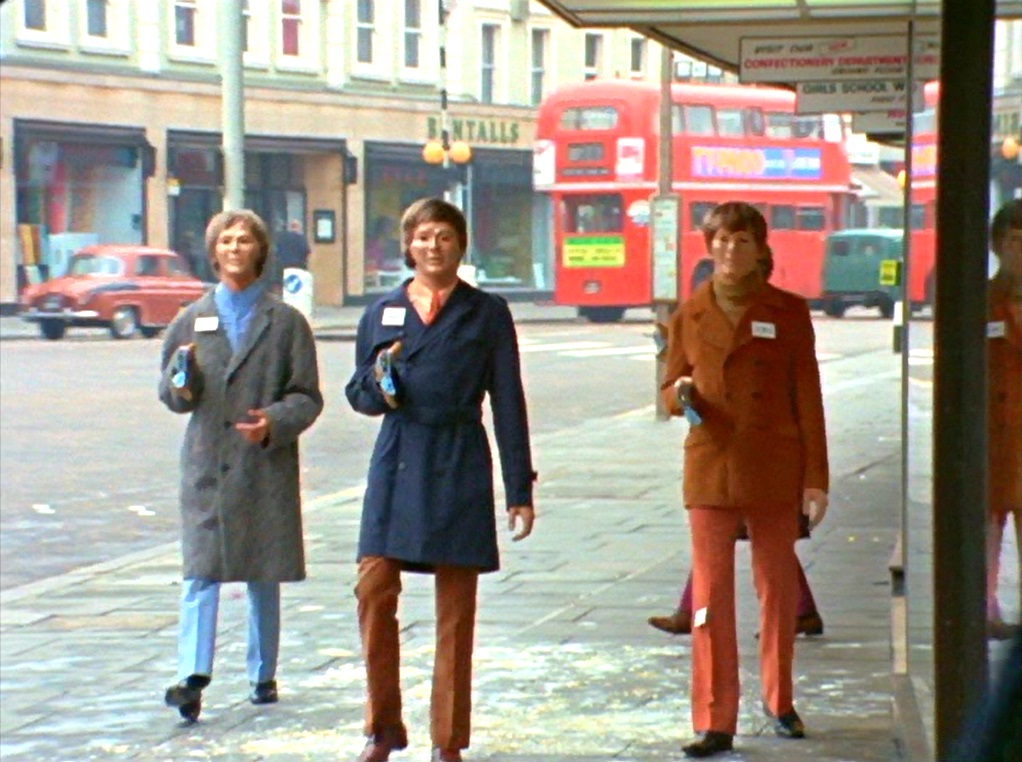
And the Autons got even scarier when they returned the following year. Not content with dominating the retail world, the Autons turned their attention to plastic sofas (which ate people), alongside killer teddy bears and killer policemen. This 1971 adventure actually drew a number of complaints; the production team’s commitment to making Doctor Who scary left a number of children too afraid to take their teddy bears to bed, and the police were none too pleased at the adverse publicity generated by ‘Terror of the Autons.’
And the BBC continued to make Doctor Who scary in the modern era. The writer Steven Moffat was particularly gifted at this, often weaponising bodily functions to stoke terror in his audience. In ‘Blink,’ it was the act of blinking. “Blink and you’re dead,” the Doctor warned. In ‘Deep Breath,’ it was breathing; if the clockwork droids heard you draw breath, they’d gut you for parts. In ‘Boom’ it was the simple act of moving; if the Doctor so much as flinched, he’d be blasted into atoms.
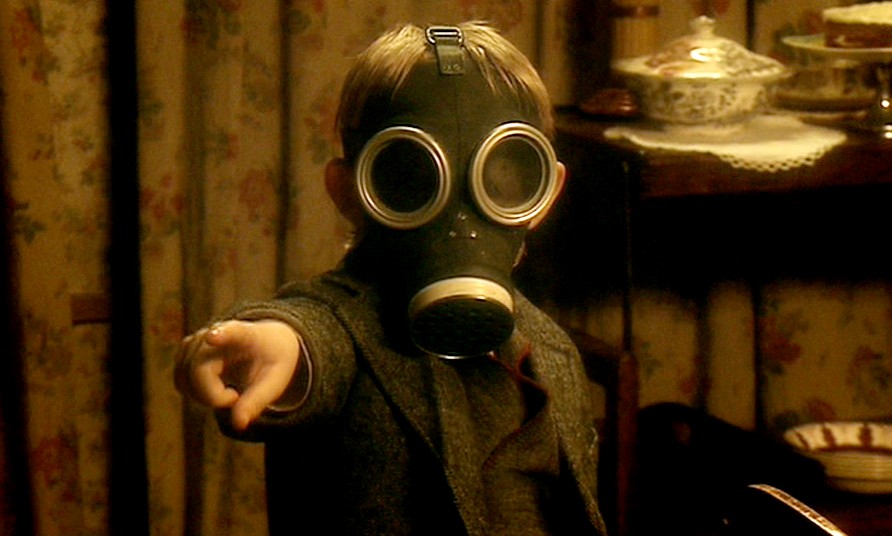
Steven Moffat also made Doctor Who scary in more subtle ways. The gas masked people in ‘The Empty Child’ were terrifying simply because they were zombies that could transform their victims with just one touch. But these ‘monsters’ still riffed on the recognisable and mundane, such as innocent children and the simple gas mask itself. And then there was that primal cry: “Are you my mummy?” It’s heartfelt, it’s benign… sad, even. But in ‘The Empty Child,’ it was a war cry. If you heard the words “are you my mummy?” you were not long for this world.
But there are of course other factors that make Doctor Who scary. Interestingly, the series didn’t tap into the “Tooting Bec” concept until several years into its run. Before 1966’s ‘The War Machines,’ the majority of its stories took place away from contemporary Earth.
Prior to this, much of the programme’s appeal – and one of the factors that made Doctor Who scary – was its monsters. Indeed, the show’s popularity exploded after the arrival of the iconic Daleks – the famous little green blobs in bonded polycarbide armour. They resembled pepperpots, with sink plungers and egg whisks for weapons – and yet, in the UK, they became as famous as The Beatles.





Simply put, the Daleks made Doctor Who scary. But why? There’s not a clear answer to that question. If there were, we could bottle it and sell it. Certainly, one of the great advantages of a Dalek is that it doesn’t look like an actor in a suit, so there’s a high level of credibility. And the fact that their voices are so monotone, so lacking in emotion, so bent on the extermination of any species that isn’t Dalek… these monsters are evil in its purest form.
Perhaps that’s why the Daleks make Doctor Who scary; they tap into a deeper human aversion to evil. And it’s important to remember that the Daleks made their debut in 1963, less than 20 years after the defeat of the Nazis, on which they were based. Perhaps these monsters tapped into the traumatic memories of their viewers, as well as their deeper fears of a future fascistic uprising.
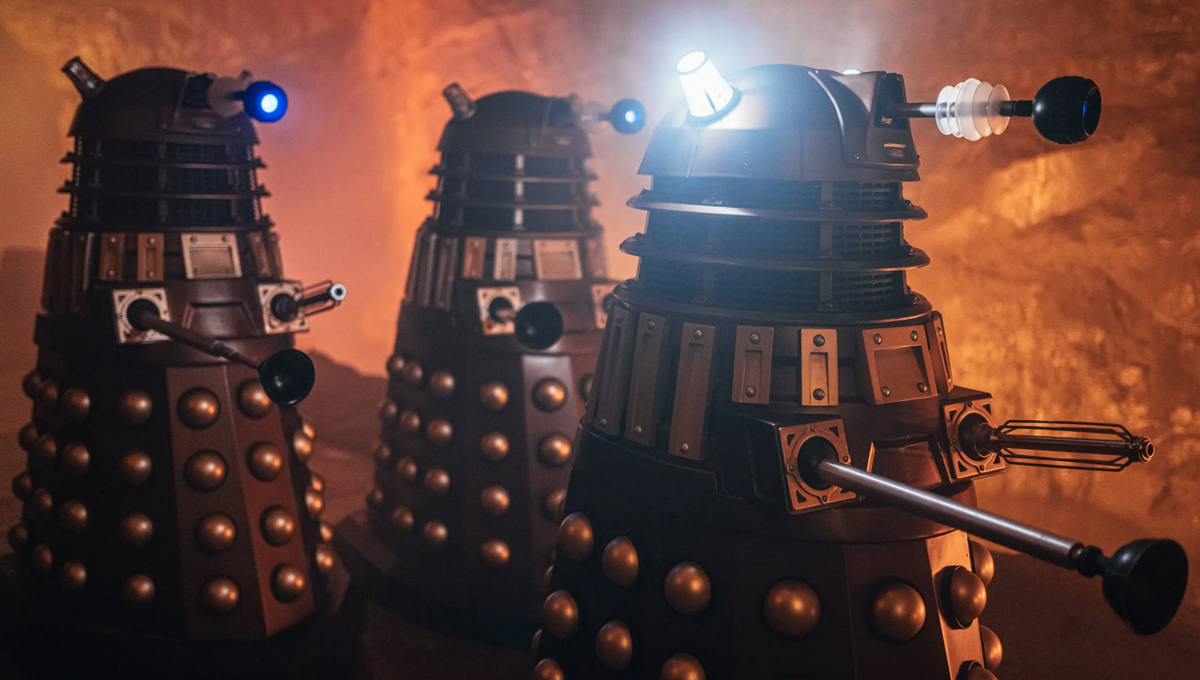
But of course, it wasn’t just the Daleks who made Doctor Who scary. The series has borne more monsters than we could possibly list in this article, but they are integral to the show’s appeal, and the nightmares they’ve induced. For instance, the actor Sophie Aldred, who played Ace, cited the Cybermen as her own personal ‘nightmare fuel’ when she was younger, to the extent where her mum stopped her from watching the show.
In the modern era, the Weeping Angels are the monster that has contributed the most to making Doctor Who scary. These “lonely assassins” first appeared in the aforementioned ‘Blink,’ and could only move when unobserved – hence why the act of blinking was so deadly to their prey.
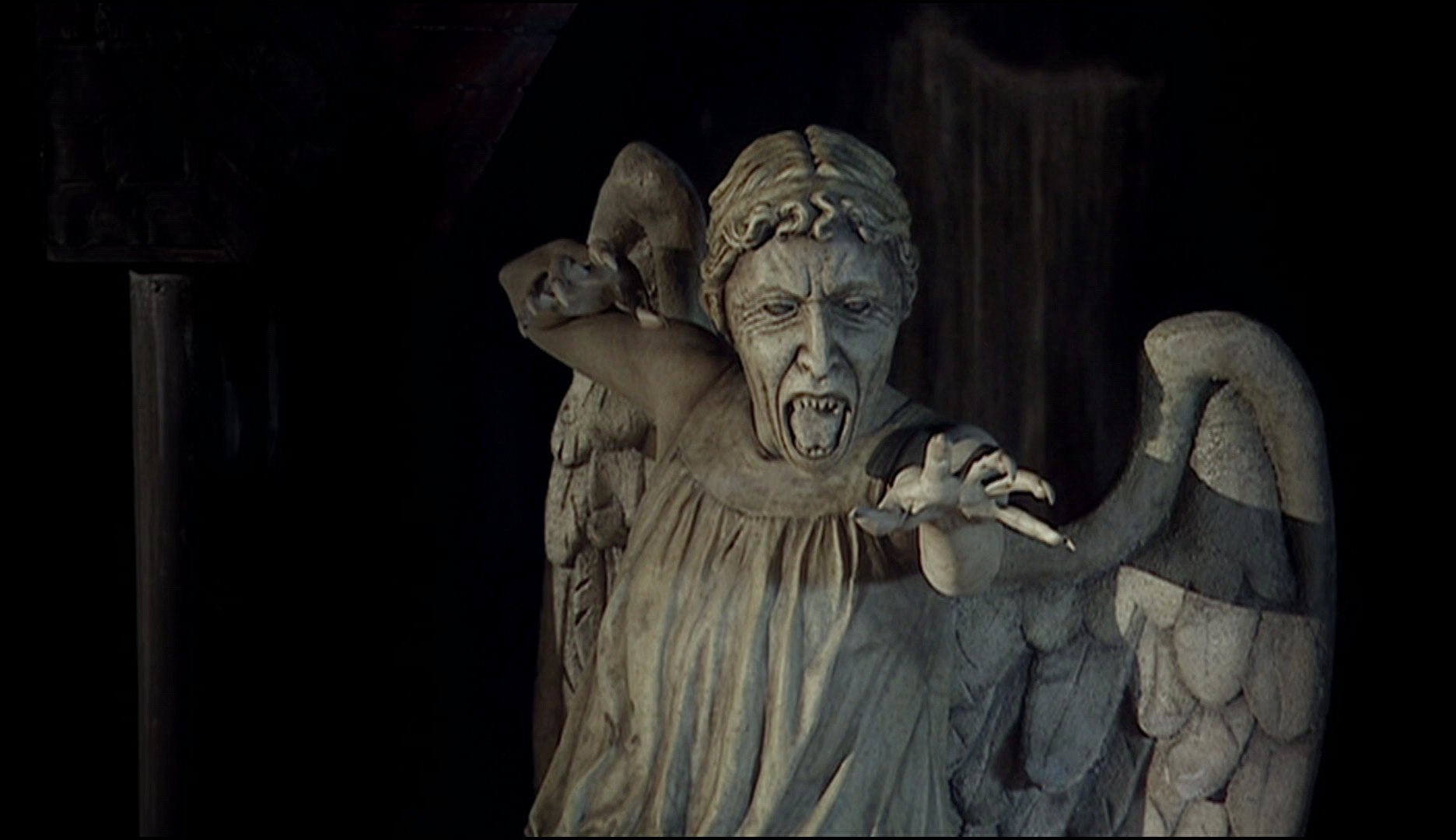
It’s possible that the Weeping Angels became as iconic as the Daleks themselves – perhaps even more so in the modern age. There is something universal about their appeal; confronting a Weeping Angel is a bit like playing the classic playground game Red Light, Green Light – something that the Five Night’s at Freddy’s franchise uses to great effect. It’s terrifyingly attractive.
But let’s face it, there are some corners of the universe that have bred the most terrible things, and these are altogether more frightening: cancellations. Charity records. Bad writers. Canon destroyers. These really are the stuff of nightmares for many a Doctor Who fan!
But seriously, tell us: what do you think makes Doctor Who scary? Is it the monsters? Is it the ‘fear of the everyday’? Or is it something else? Let us know in the comments below.

Leave a Reply