
Back in 2010, the Eleventh Doctor’s universe was rocked by an explosion which left cracks in the skin of the universe. But how can these cracks still exist if the explosion never happened…?
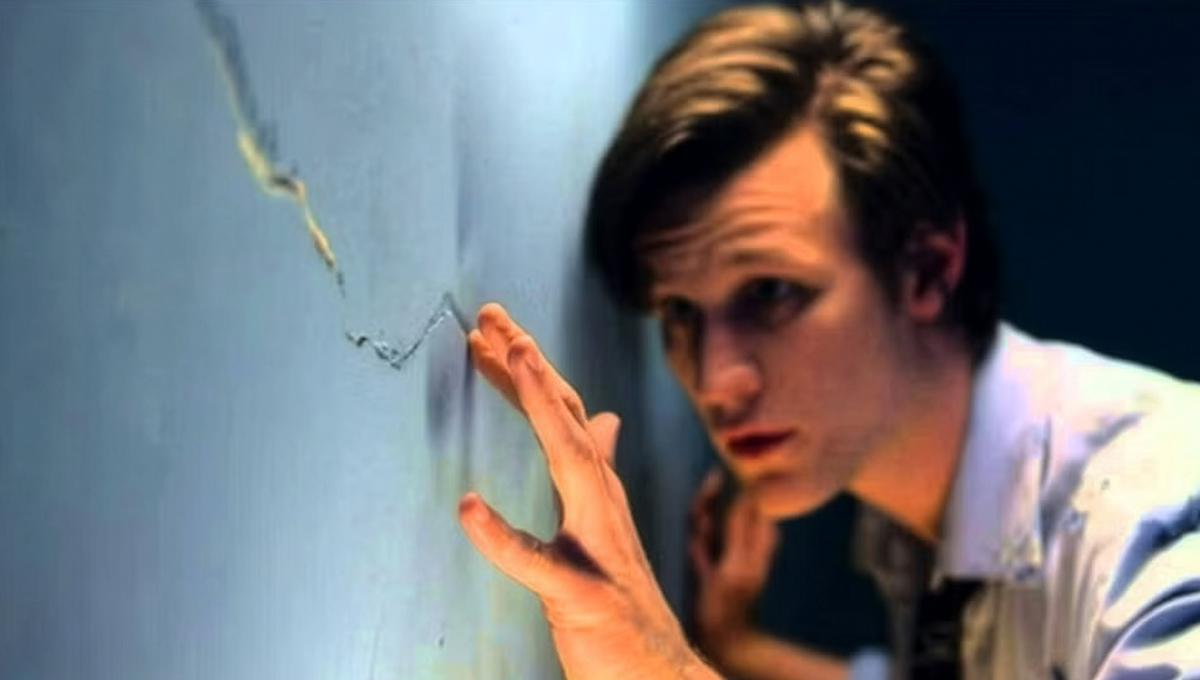
First, a little back-peddling (and spoilers, sweetie.) In Series Five, the Eleventh Doctor encountered mysterious cracks wherever the TARDIS landed. He was also given an ominous prophecy by Prisoner Zero: “The Pandorica will open. Silence will fall.”
All of these mysteries culminated in the Series Five finale (appropriately titled ‘The Pandorica Opens’) where the Eleventh Doctor’s greatest enemies formed an alliance against him. They knew where these cracks came from; they were the result of the TARDIS exploding. And they knew that only the Doctor could pilot the TARDIS, so they sealed him inside the inescapable Pandorica, meaning that the explosion would never happen. It was the perfect plan.
Or it would have been, had the TARDIS not blown up anyway. You see, it was really under the control of a mysterious religious movement known as the Kavarian chapter of the Church of the Papal Mainframe. Also referred to as Church of the Silence, their raison d’être was to kill the Doctor and stop him from reaching the battlefield of Trenzalore. They figured that blowing up the Eleventh Doctor’s TARDIS would be enough to stop the man in his tracks. It didn’t, of course, but it did leave cracks in the skin of the universe.
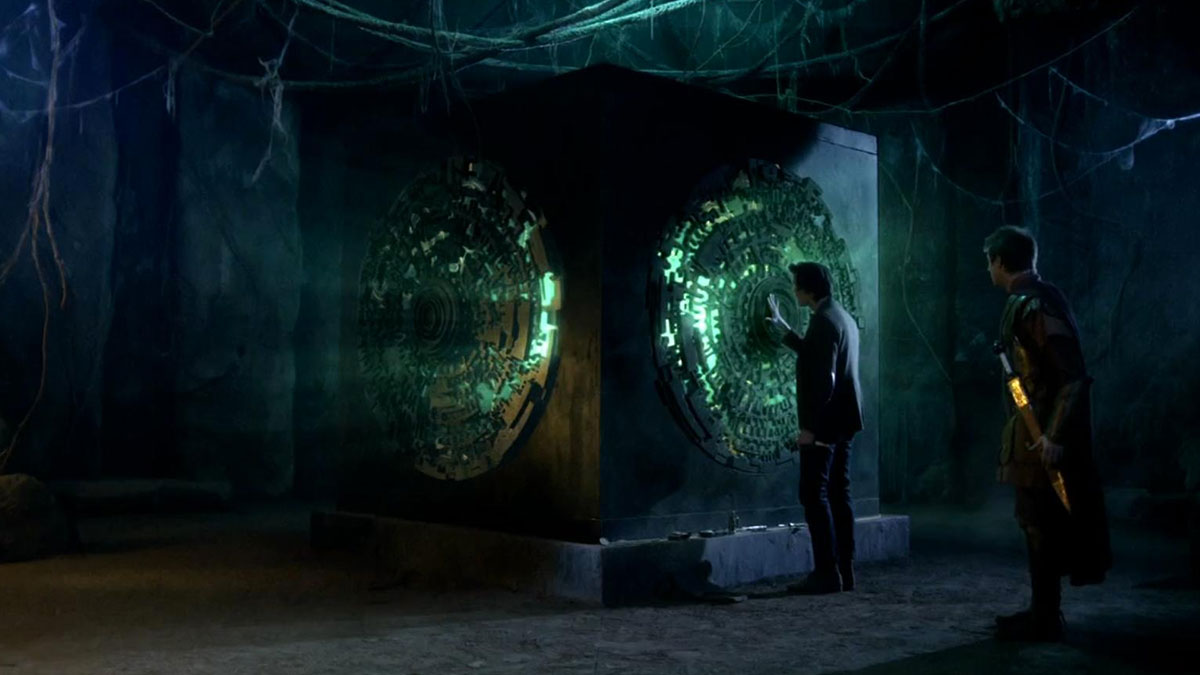
The other downside to this otherwise flawless plan was that, in blowing up the TARDIS, the Church also obliterated the entire universe, leaving planet Earth as the last world standing. The Eleventh Doctor, once free of the Pandorica, then used it to reboot the universe by flying it into the still-exploding TARDIS and creating a second “big bang.” This, in effect, formed a new universe where everybody was alive and well, and where the TARDIS never blew up. Happy days.
But this is where things start to get timey-wimey. Because even though the Eleventh Doctor saved everyone from the machinations of the Mainframe, the cracks in the skin of the universe remained. They shouldn’t have been there; if the TARDIS never exploded, the cracks shouldn’t have formed, right?
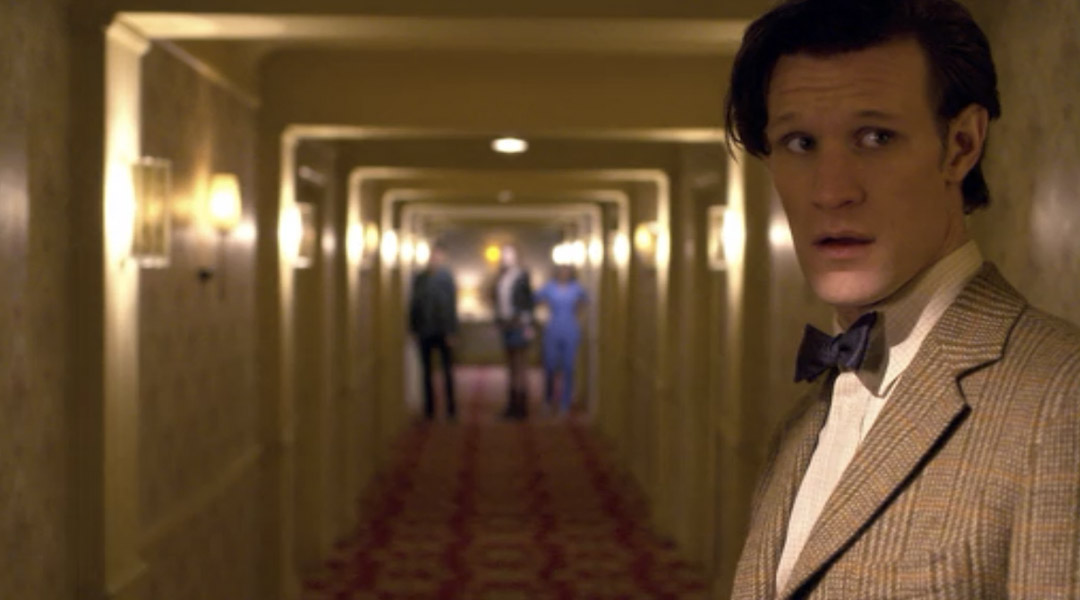
Perhaps, but this is Doctor Who. In Series Six, the crack returned with a vengeance in ‘The God Complex,’ with the Doctor stumbling across one in a hotel room. And there was another crack in the Eleventh Doctor’s final episode, through which the Time Lords were calling from a parallel dimension, asking for permission to step through. Ironically, this all took place on the planet Trenzalore – the one planet the Church had been trying to stop him reaching.
So how do we wrap our heads around this paradox? How do we explain the fact that the cracks remained long after the universe had been rebooted, and after the TARDIS’ destruction had been averted?
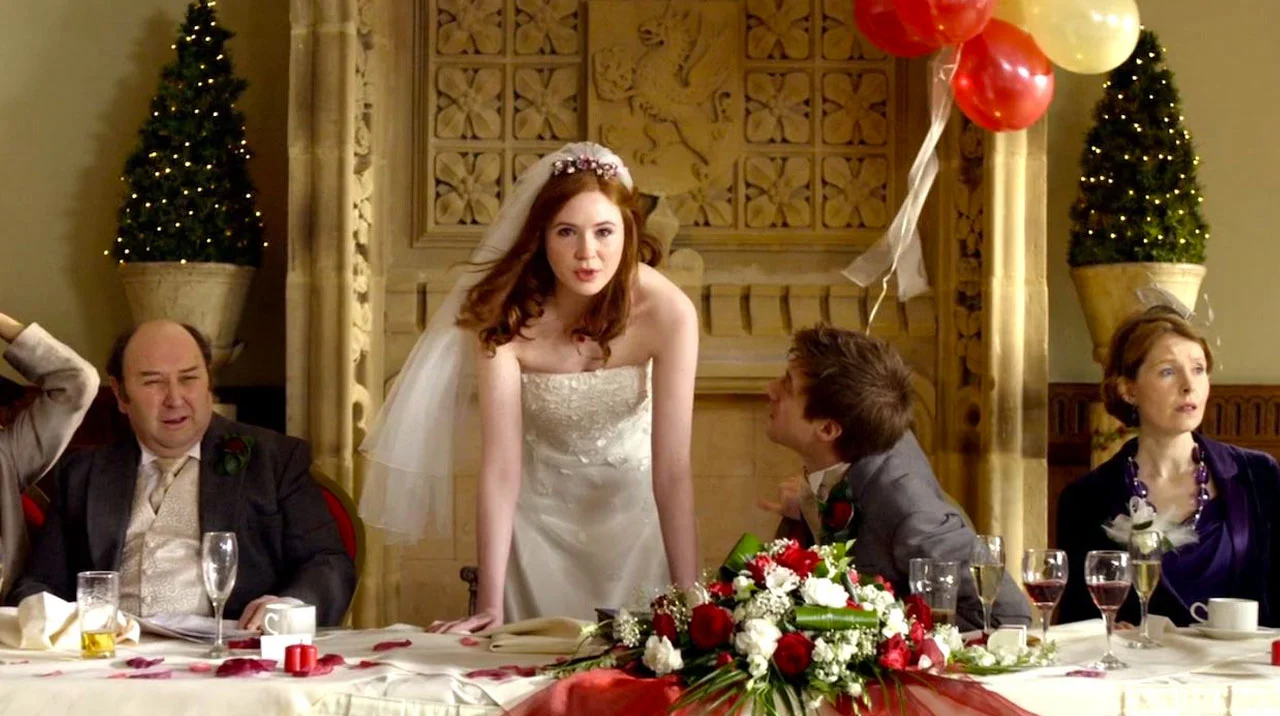
Well, we have to remember that the Eleventh Doctor shouldn’t have existed, either. Technically, he was killed when he flew the Pandorica into the heart of the exploding TARDIS and rebooted the universe. He only came back because his companion Amy Pond remembered him at her wedding, and essentially willed him back to reality.






That’s the short version, anyway. The long version saw the Eleventh Doctor travelling back along her timeline and seeding himself into her memories before he faded from existence. This led to a jarring scene in the episode ‘Flesh and Stone’ where two versions of the Eleventh Doctor appeared – one with a jacket, and one without. At the time, fans thought this was a continuity error, until they were given the big picture in ‘The Big Bang.’ The jacketed Doctor, it transpired, was the future version who had travelled back and was trying to get Amy to remember him.
It follows, therefore, that if Amy can ‘think’ the Doctor back into existence, she can ‘think’ the cracks back into existence, too. They shouldn’t have been there, but then neither should the Time Lord. It’s a paradox that (kind of) makes sense if you account for Amy Pond and the power of her brain.
An alternative explanation could lie with the TARDIS itself. Remember, this is a highly-sophisticated space-time vessel capable of visiting any planet in the universe, and any date in that planet’s existence. It can also travel into other dimensions, alternate timelines and parallel universes. If such a machine exploded, with such magnitude that it could wipe out a whole universe, it’s possible that the after-effects of such an explosion could leave traces in other dimensions.
This explanation allows for the persistence of the cracks in the rebooted reality. The TARDIS did explode, but in a different timeline, and the effect was so devastating that it scarred the surface of other realities.
And speaking of devastating explosions, it’s possible that your brain is now at breaking point – in which case, we will refer you to the much simpler, more cynical, third explanation: the cracks still exist because Drama, and because Moffat. Steven Moffat, after all, is the king of timey-wimey, and sometimes it’s more fun to just get lost in the head-scratching confusion of the Eleventh Doctor’s era and enjoy the ride – even if that ride takes you into the heart of an exploding TARDIS and fries your brain. Part of the joy of Doctor Who is the bafflement and bemusement it causes; this article wouldn’t exist without it. So does it really matter if the stories don’t make sense?
Maybe not. But you might appreciate some hand-holding the next time you tackle ‘Ghost Light‘ or even Doctor Who: Flux, and for those head-scratchers we’ve got you covered.
In the meantime, tell us: what do you think is the explanation for the persistence of the cracks in the skin of the universe? Let us know in the comments below.


Leave a Reply