
Doctor Who has fought crazy robots for years, but the revolution just got real. What do the advances in AI mean for the future of our favourite programme?
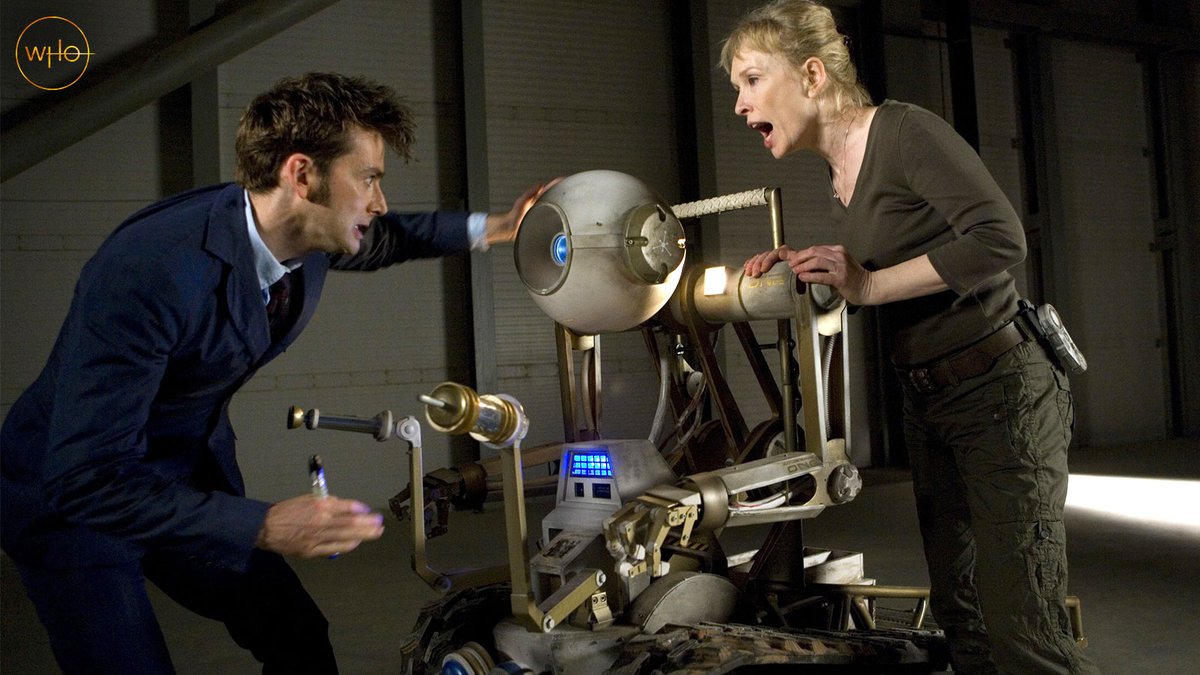
Our friends at The Doctor Who Companion posted an interesting article about Google’s new AI-powered ‘intelligent search box’ which is changing the way searchers browse the web. “Instead of giving you a list of links,” says the DWC, “Google Search will begin to show users ‘AI-powered interactive experiences,’ including ‘information agents’ to gather information on a user’s behalf, along with tools that let users build personalized mini apps tailored to their needs.”
Simply put, this means that the battle for page one of Google will soon end. Google will simply make its robots collate the information and summarise it neatly for its readers. It’s efficient, for sure, but perhaps not the best way for a website to garner traffic and draw people to its landing page. But it should be able to answer any nagging Doctor Who-related search query with ease.
We tested it. We gave Google an easy one: “Was The Timeless Children a good idea?” we asked. Google wasn’t sure, but gave us two bulleted lists: The Case for it Being a Good Idea, and The Case for it Being a Bad Idea, citing Reddit as its sources. Oh, and YouTube. In summary, it said: “Ultimately, fans tend to agree that while the concept of shaking up the mythos held promise, the heavy-handed execution and lore overload left a lot to be desired.” See you in the comments section, people.
Meanwhile, it’s no secret that Lovarzi’s own use of AI-generated assets for Doctor Who content has raised some (attack) eyebrows. I never know whether to feel insulted or flattered when people claim that my articles are “clearly AI generated” (they’re not) but I hear the webosphere’s frustrations when they watch videos telling them that the Second Doctor was played by Patrick Trooton, and that Sylvester McCoy made his debut in ‘Time and the Rainy.’ We don’t do it on purpose, I promise.
This underlines people’s biggest beef with AI, I think. When the robots make a mistake, the result can look cheap, sloppy… People picture penny-pinching, tightwad tycoons who will do anything to make a quick buck, regardless of the output’s quality. Such tycoons might not exist, but the perception is there. For AI-generated content to work, the tools should be used sensitively, and imperceptibly, in concert with real human skills.
In Doctor Who‘s case, the showrunner Russell T Davies recently incurred the internet’s wrath when he shared an AI-generated clip of man travelling back in time and visiting the Doctor Who set in the 1960s. Granted, this was a more idealised version of Doctor Who production; everything was tinged in a fuzzy, sepia hue, and the cast and crew were milling around chatting, as if on a tea break. There was a curious rendition of William Hartnell, and a version of the console room that (while interesting) clearly wasn’t the First Doctor’s TARDIS. Davies captioned the clip “amazing” with a heart emoji, and the Gram went into meltdown.
Now, whether or not it was “amazing” is down to personal taste, and if there’s one thing we Doctor Who fans suck at, it’s reaching a consensus. (I think ‘Battlefield‘ is amazing, and I’m still searching for allies.) In this case, some people took umbrage with what they dubbed ‘AI slop,’ fearing that Davies’ glowing appraisal would pave the way for an AI-generated Christmas special. If Davies thought that this curious, robot-rendered mashup was “amazing,” were we suddenly on crash course for a Christmas of cursed content, starring the one and only Patrick Trooton?!






At the same time, there’s no denying that AI could, potentially, work wonders when it comes to missing episodes. Obviously, most (if not all) Doctor Who fans would rather see the real deal, and there’s a good possibility of more returns given the sterling work of Film is Fabulous!
And in the likely event that we never get all the missing Doctor Who stories back, is there anything wrong with using AI to recreate them? In principle – no, not if it’s done well. And let’s face it, there are some questionable AI renditions of lost episodes out there.
But imagine how good these recreations could be if they were produced to a high standard. We already have a wealth of source material to draw from; many adventures have telesnaps, and we have the soundtrack for every single episode. There are lots of pieces, and AI’s ability to interpret these pieces is growing stronger every day.
So is this something that the BBC would ever invest in? It’s hard to say. On the one hand, as I say, there is a real possibility of making something magical; AI now has the power to recreate ‘Marco Polo‘ in a manner that is almost indistinguishable from the original, and it could be done relatively cheaply; these days, it may even be more economical to use AI rather than a team of animators.
But on the other hand, there is still a lot of consumer resistance when it comes to AI-generated content, as Russell T Davies discovered when he shared the ‘offending’ Lime Grove rendition on his Insta. Nobody likes slop (or perceived slop) and nobody wants their entire career to be wiped out by a few lines of code. So could the BBC conceivably venture down this path without plunging the Whoniverse into a maelstrom of metdowns and hashtags?
It remains to be seen. In the meantime, tell us: How do you feel about AI generated content? Does it have its place in the world of Doctor Who? Or is it something that we should avoid like the (Sensorite) plague? Let us know in the comments below.

The moment Doctor Who starts using AI I will stop being a Doctor who fan. And I am deep in the trenches. It’s basically my whole life, haha. But I will never let human art be replaced.
I can see a case for using it to recreate missing episodes.
The use of AI is anti-art, unethical for the stolen work, climate impact, and the horrid ways of training it by having poorly paid workers in poorer countries flag disturbing material and takes jobs away from people in the arts, which is already struggling and so inaccessible.
We should not be encouraging its use. If Doctor Who starts using it, it may as well already be dead. Even if it was good (which it wouldn’t be), I couldn’t watch it. I don’t want to read articles about the arts that are pro-degrading of the arts either.
That’s all not to mention the ethical concerns of reanimating dead actors to preform scripts they haven’t consented to preforming and the actors who wouldn’t get work because of it. What a dangerous precedent to set.