
When Peter Davison took over the TARDIS, he doubled the show’s ratings. The question is: would Doctor Who have survived without him?
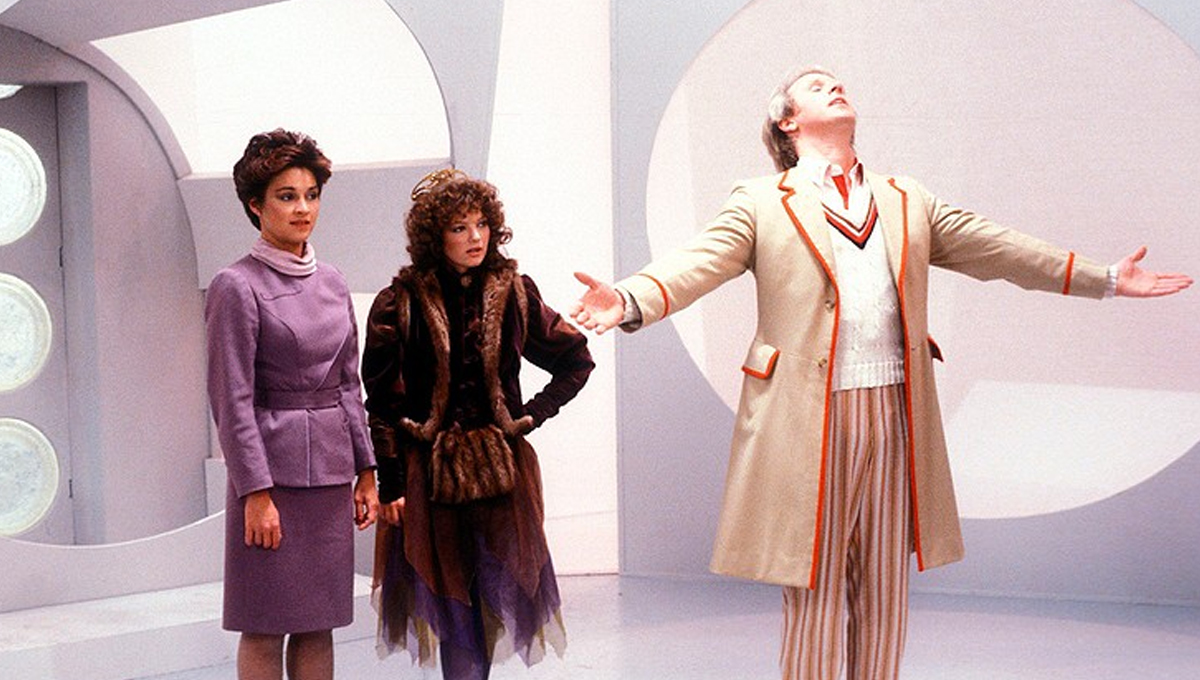
When John Nathan-Turner took over as Doctor Who‘s producer in 1980, the ratings went into a sharp decline. The previous year, stories such as ‘City of Death’ had seen viewers in excess of 16 million tuning into the Time Lord’s adventures, and yet by Season 18, as few as 5 million were watching. The show, it seemed, was in desperate need of a regeneration.
And it certainly got this with the arrival of Peter Davison – fresh-faced and popular, having made a name for himself in the charming veterinary drama All Creatures Great and Small. Controversially, he was by far the youngest man ever cast in the leading role at a mere 29 years of age, promising to bring a more youthful energy to the Time Lord’s travels. We will never know if Peter Davison was solely responsible for the surge in Doctor Who‘s popularity in the early 80s, but at the same time one can’t ignore the fact that, in his first season, the ratings doubled.
Certainly, Peter Davison offered something different. Previous incarnations of the eponymous Time Lord had possessed a paternal (if not grandfatherly) quality, effusing a sense of comfort and security. Peter Davison’s Doctor, on the other hand, was more like a public school boy. He certainly dressed like one; he no longer donned the attire of a wizened university professor, but Edwardian cricket whites, complete with a white sweater and trainers. He was a dashing young hero in every sense, with a mane of glowing blonde hair.
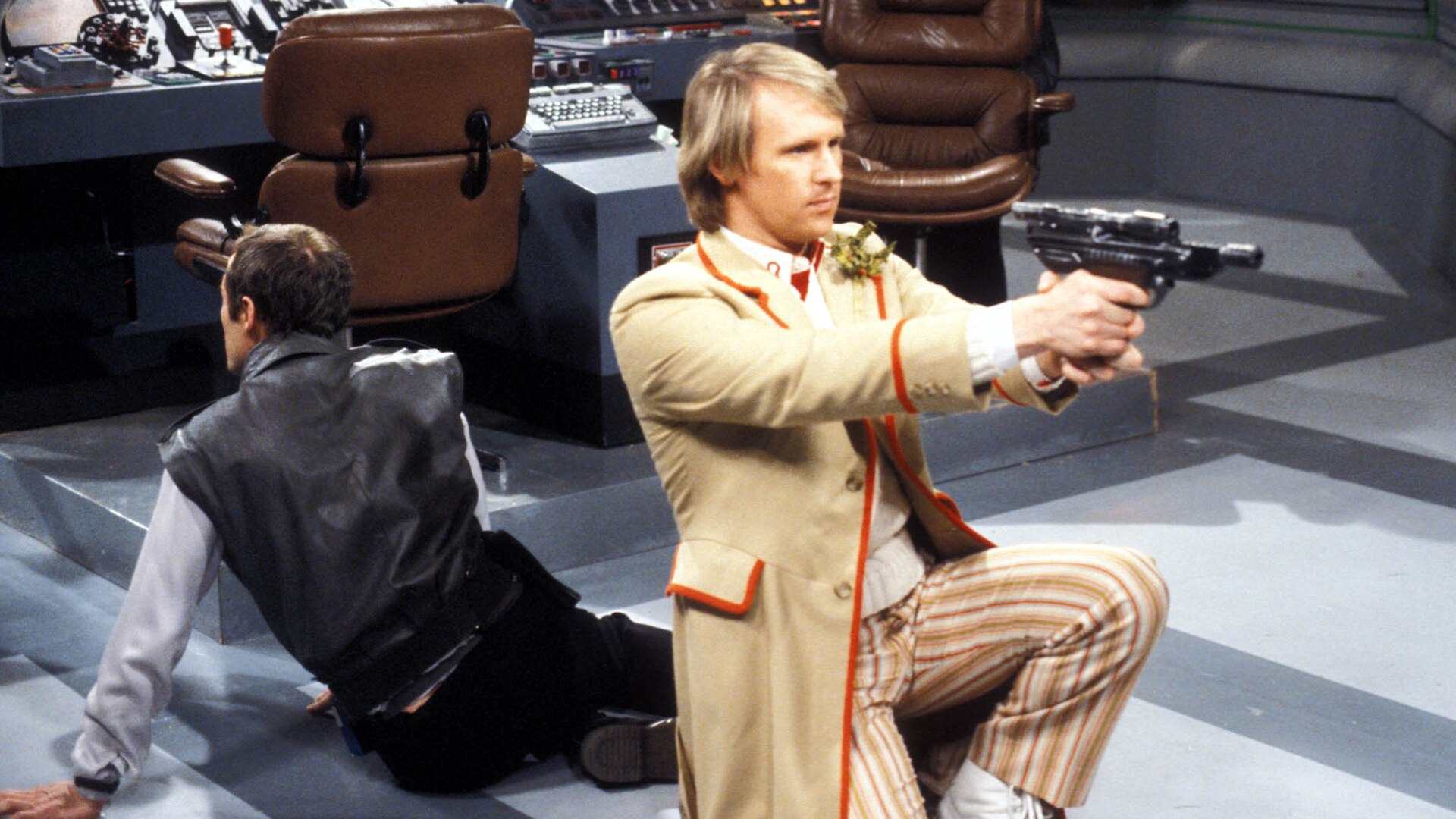
Now, there is no scientific way of measuring Peter Davison’s good looks against the programme’s ratings, but this was a gear change, and audiences like gear changes; they will turn up out of curiosity, if nothing else. This happened when Jodie Whittaker took to the TARDIS as the first female Doctor in ‘The Woman who Fell to Earth,’ and the ratings skyrocketed to an impressive 10.96 million. Peter Davison enjoyed a similarly strong debut, with 9.1 million tuning in for the first part of ‘Castrovalva,’ which quickly rose to 10.4 by the story’s final instalment.
However, novelty alone cannot explain the instant, meteoric success of Peter Davison’s Doctor. The viewing figures remained high throughout his first season, hovering around the 8-9 million mark for his early adventures, then repeatedly hitting 10 million from ‘The Visitation’ onwards.
So would this period of the programme’s history have enjoyed such success without Peter Davison? It’s possible, but there were other factors at play which contributed to the series’ revival.






One of these was the tonal shift. Towards the end of the Tom Baker era, John Nathan-Turner and his script editor Christopher H. Bidmead resolved to bring the show back to its more serious, scientific roots. This meant that the “undergraduate humour,” as Nathan-Turner referred to it, had to be jettisoned, and many of the stories during this period had a grounding in legitimate science – or at least, legitimate scientific concepts, such as tachyonics. Bidmead, after all, was himself a keen amateur scientist.
Admittedly, some of these stories might not have been as popular as those that preceded them, but the message was clear: Doctor Who was not a joke to the BBC. They took it seriously, and treated the show with respect. This may have elevated the public’s perception of the programme during the Peter Davison years, and made it more culturally (or even socially) acceptable to watch. This wasn’t simply a piece of nonsensical sci-fi for the kids, held together with bubble wrap and sticky-back plastic; this was a credible SF drama, led by a man who was a household name.

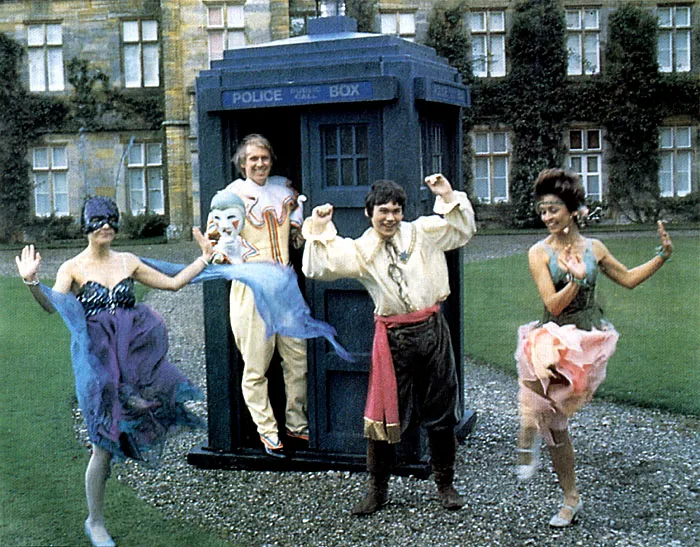
It’s important at this point to remember Peter Davison’s co-stars, too. In his first season, the Doctor was part of an ensemble: there was the ditsy and irascible flight attendant; the socially awkward and nerdy troublesome teen; and the orphaned girl. This was in stark contrast to the previous TARDIS team which John Nathan-Turner described as being rather too “smart.” Previously, the Doctor had been joined by his fellow Time Lord Romana, who was every bit as clever as he was, if not cleverer, plus an all-knowing supercomputer in the shape of a dog. Nathan-Turner was concerned that there wasn’t anybody in the cast that the audience could easily identify with.
It’s possible, then, that Peter Davison’s popularity could have taken a hit if his companions had been (how do we put this?) cleverer. Or perhaps ‘wiser’ is a better word, as Adric and Nyssa were not stupid by any stretch of the imagination, and even Tegan had her moments. Peter Davison’s TARDIS team better resembled a group of peppy sixth form students on a college excursion (or ‘high school seniors,’ if you’re unfamiliar with the British vernacular.) They were bright, but lacking in a certain degree of maturity or worldly wisdom – arguably, much like the young people tuning into the programme.
Of course, this theory is blown out of the water by the fact that Season 17 starring Romana and K9 (the “too smart” TARDIS team) saw some of the highest ratings in the show’s history. Now, this can be explained in part by the fact that ITV was on strike and audiences had little else to watch, but it’s also true that Tom Baker was at the peak of his powers in 1979, and that ‘City of Death‘ is still widely regarded as one of the greatest Doctor Who stories ever made.
The truth about Peter Davison’s popularity, then, is complex. It’s true that he was popular with the British public, and that many would have tuned in just to see his flowing locks. It’s also true that he represented something innovative and fresh for a show that was in danger of growing stale.
But there were also other factors at play: the younger, more naïve companions, and the tonal shift in the storytelling, and the souped-up graphics and synth soundtrack… In short, there was a lot happening during this period of the programme.
So did the Peter Davison era ‘save’ Doctor Who? It was certainly fighting to justify its position at the end of the Tom Baker era, and it bounced back with style, bolstered by a myriad of innovations.
Three years later, however…
So tell us what you think. Would Doctor Who have lasted if the Peter Davison era had been handled differently, or even without Peter Davison himself? What do you think was the single, biggest factor to the show’s renewed success? Let us know in the comments below.

Leave a Reply