
Doctor Who was fighting for its life in the late 80s. How did the production team manage to keep the show on the air during the Sylvester McCoy era?
Budget cuts
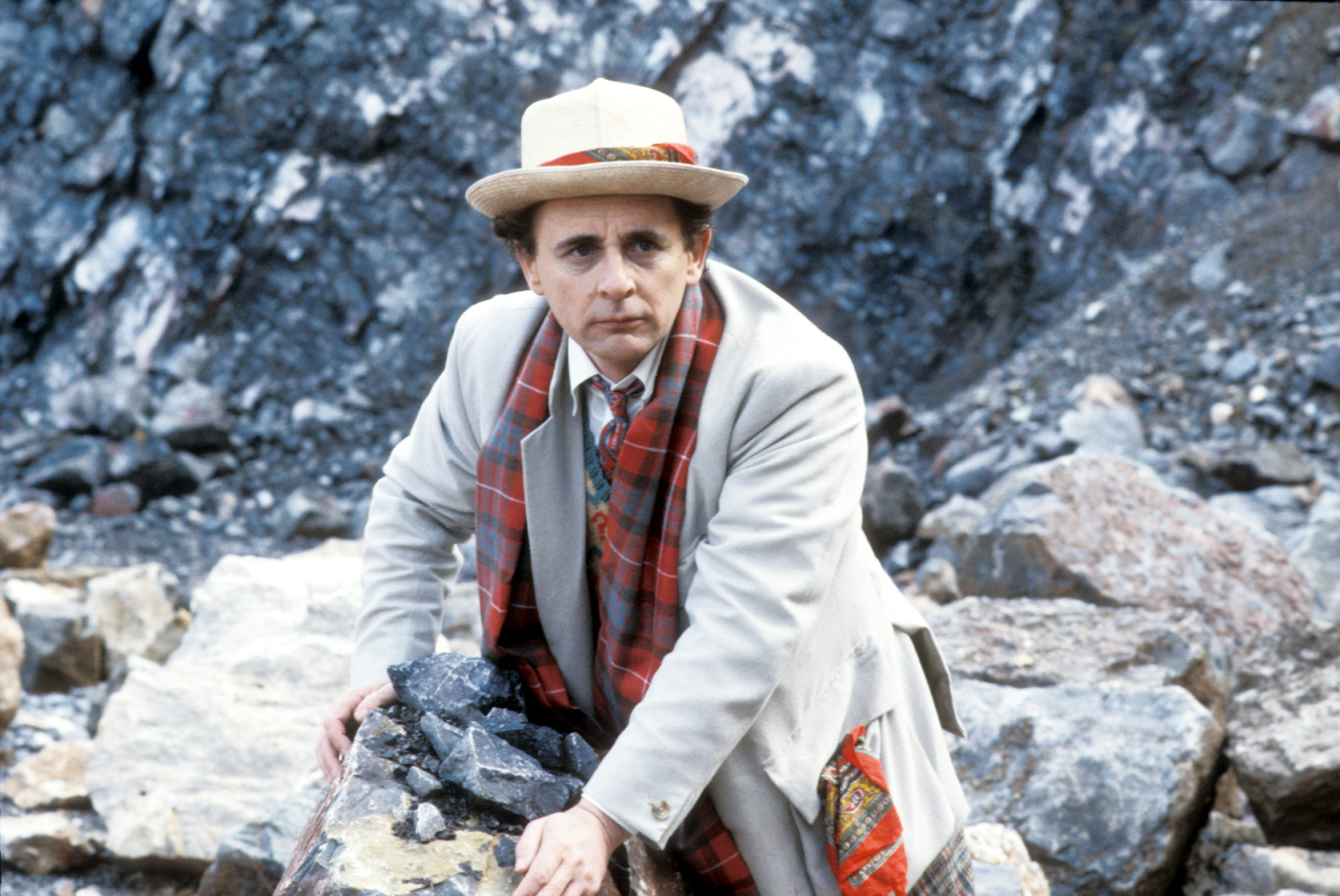
By the time Sylvester McCoy was cast as the eponymous Time Lord, the BBC was determined to spend as little money as possible on Doctor Who. It’s a matter of public record that the show was almost universally disdained at the Beeb, and was only tolerated because the public outcry had been cacophonous the last time the Corporation had tried to axe it. The BBC agreed to keep making Doctor Who through gritted teeth.
As such, one of the first things to be curtailed during Sylvester McCoy’s run was the episode count. Traditionally, Doctor Who had enjoyed long seasons of 26 episodes, and in many cases more. This number had been reduced to 13 for Colin Baker’s first season, but they were double in length. When Sylvester McCoy took to the TARDIS, the BBC cut the number to 14, and drastically curtailed the show’s budget.
Fortunately, Doctor Who‘s producer was nothing if not creative, particularly with numbers; John Nathan-Turner had famously budgeted for the programme to shoot in Paris during Tom Baker’s time, after some canny budgeting. His solution for the Sylvester McCoy era was similarly innovative; for each season, he would shoot two stories entirely on location, minimising the need for expensive sets.
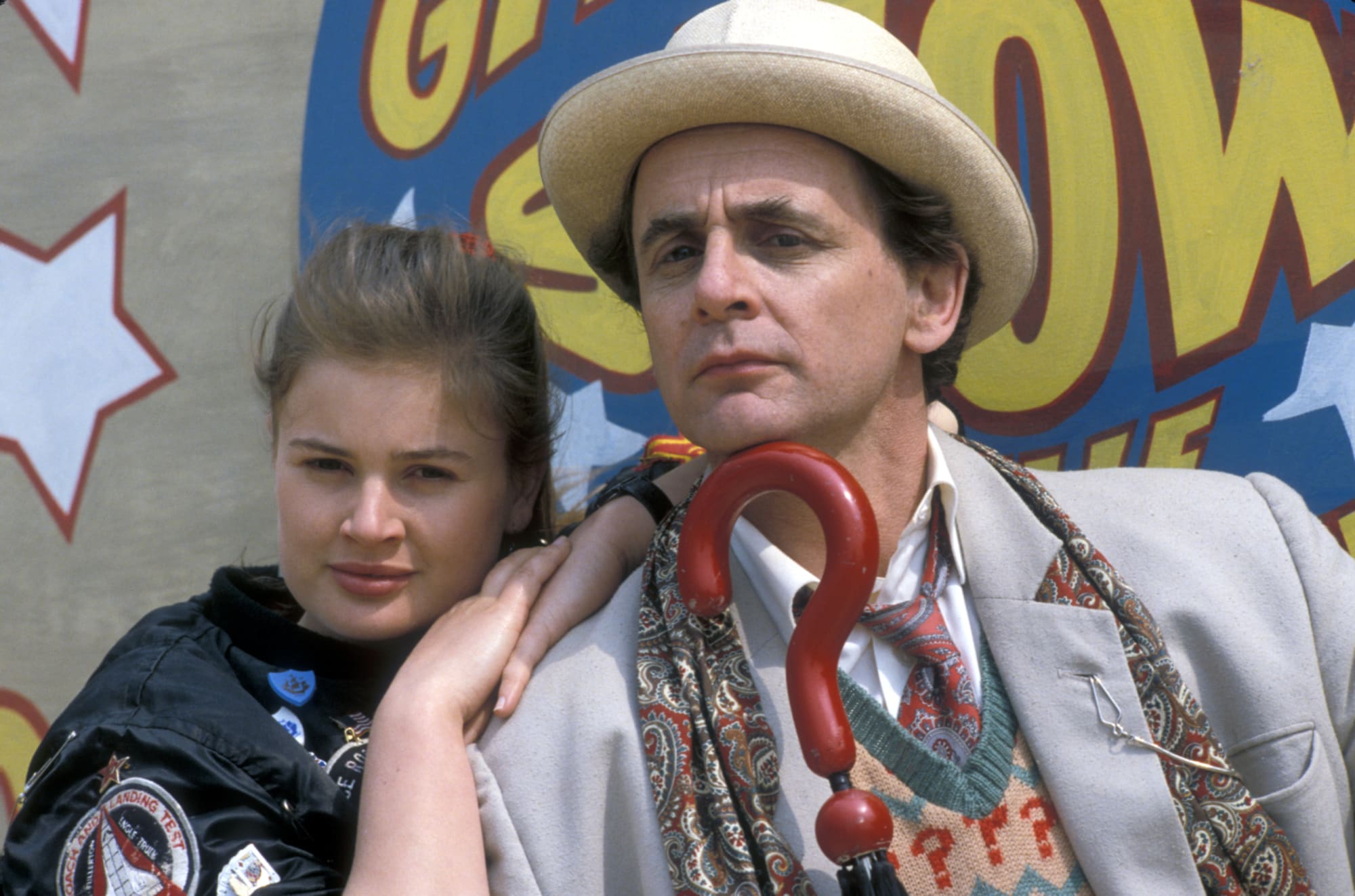
This did of course mean that Sylvester McCoy enjoyed fewer scenes in the TARDIS, but this wasn’t necessarily a bad thing; such moments had faced criticism during the Colin Baker era for being overly long and delaying the start of the actual story, and consisting mostly of squabbling between the Doctor and Peri. Now that the TARDIS team was physically restricted from shooting in the famous console room, the adventures could start sooner.
Sylvester McCoy’s stories were also pacier as a result of the slashed budget. A season count of 14 episodes meant that there were 2 x 4 parters, and 2 x 3 parters. And there’s little risk of ‘water treading’ with a three parter; the cast could jump straight into the action without marching round the time rotor bickering about burnt dinner or a concerning lack of Zeiton.
Moreover, Sylvester McCoy and his team got to visit some visually striking locations during his time. The planet of the Cheetah People in ‘Survival,’ for example, must be one of the most convincing alien worlds the classic series ever presented, even if it was filmed in a sand pit in Dorset. The team also got to film in the rolling hills of the Welsh countryside for ‘Delta and the Bannermen.’
Asbestos

Doctor Who has seen-off many existential threats during its time; the departure of William Hartnell, strike action, mangled buses… But the discovery of asbestos at Television Centre in 1988 was a crushing blow. Production was halted on a number of programmes, including Doctor Who. ‘The Greatest Show in the Galaxy’ (Season 25’s final story) looked destined for the dustbin.
But not if you’re John Nathan-Turner. He had already seen the cancellation of one Doctor Who story due to strike action (‘Shada‘ in 1979) and he wasn’t going to see the same thing happen to Sylvester McCoy – not when he had a perfectly good car park to film in.






Yes – ‘The Greatest Show in the Galaxy’ has the unusual accolade of being the only Doctor Who adventure to be shot almost exclusively in a car park, but you would never know; the fact that this particular story was set in the passages of a circus tent made its execution simple. All the team had to do was erect a tent in the parking lot of Elstree Studios, and roll the cameras. It looked fantastic.
The only flaw in this master plan was the TARDIS scenes. They were critical to the story, and the notion of reconstructing the TARDIS interior in the backyard of a TV studio was barmy.
But this is Doctor Who; barmy is its golf. Sylvester McCoy and Sophie Aldred got their TARDIS scenes, and yes, they were filmed in a car park – a remarkable feat, and a poignant one; this turned out to be the last proper outing for the classic TARDIS set, which was falling apart at the seams. (It did make a brief return for 1989’s ‘Battlefield,’ dimly-lit and sans its real roundels.)
It sounds ridiculous, but the plan worked; it looked to all the world that Sylvester McCoy was filming inside a TV studio. Yes, the circus tent was obviously an outdoor-shoot, but it fitted the story. In hindsight, it’s remarkable that ‘The Greatest Show in the Galaxy’ made it onto the screen, and in such good shape; had it not been for some savvy thinking on the part of its production team, we could have had a much shorter season for the show’s 25th anniversary year.
The scheduling
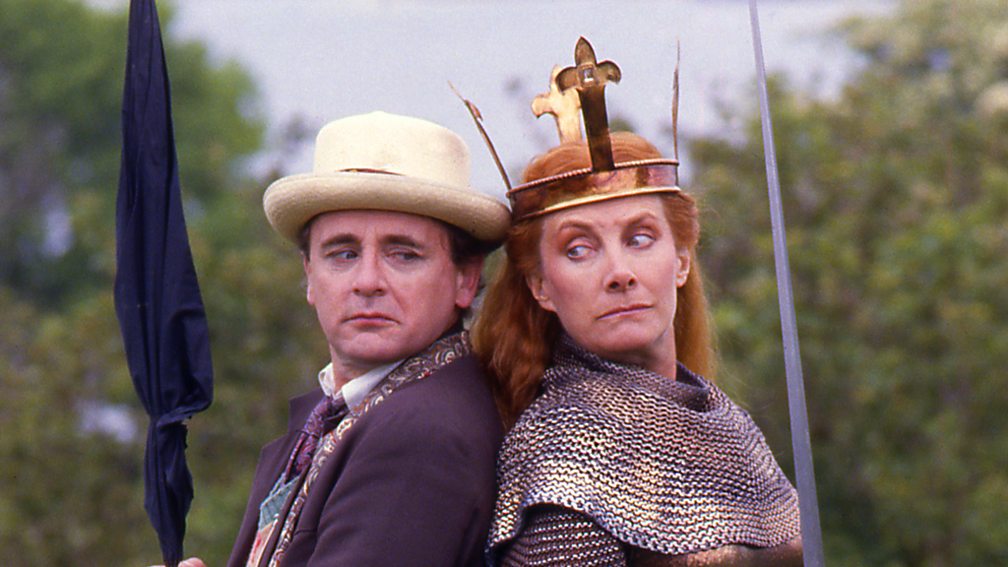
At the risk of going full conspiracy theory, the BBC did actively try to kill Doctor Who in the late 80s – by scheduling it in such a way that no one would see it. For the Sylvester McCoy era, the series was placed directly opposite one of the UK’s most popular soap operas, Coronation Street. The Corporation knew exactly what would happen; the kids would demand to watch Doctor Who. The grown-ups would demand to watch Vera Duckworth – and the grown-ups would win. Moreover, the BBC launched into Doctor Who‘s new seasons with next-to-no advertising; Sylvester McCoy himself stated that even his family and friends didn’t know the programme was back on the air.
Inevitably, the series’ viewing figures took a dive, and the 1989 story ‘Battlefield’ has the unfortunate title of having the lowest-rated episode of the classic run, at measly 3.1 million viewers. It’s a shame that such a good programme was missed by so many people; ironically, Season 26 is perhaps one of the best and most beloved series of the Sylvester McCoy era.
These scheduling machinations did eventually contribute to the show’s quiet cancellation in 1989, but the TARDIS team kept fighting until the bitter end. The quality of the stories actually picked up in its final run of episodes, and in fact many of the adventures have gone on to become fan favourites, such as ‘Ghost Light‘ and ‘The Curse of Fenric.’ And as the script editor Andrew Cartmel pointed out in one of the Blu-ray box sets, there aren’t many other programmes from this time period that are still being discussed.
All in all, Sylvester McCoy is a Time Lord who survived against the odds, and left a tremendous legacy. What is your favourite moment from the Seventh Doctor‘s time?


Leave a Reply