
Often overlooked, ‘The Waters of Mars’ is one of the Tenth Doctor’s last adventures – and one of the greatest ever written.
It’s no secret that the Tenth Doctor is one of the most popular incarnations of all time. When he announced his departure in 2008, people were understandably disappointed. But the production team had a full year to decide how he would leave, and opted to build up to his regeneration over the course of five specials.
‘The Waters of Mars’ was the third of these specials, broadcast on the 15th October 2009. It was also his penultimate adventure, as the final specials were a two-parter, meaning that the stakes were high.
And its initial trailer gave little away. This was an unassuming story which, as far as the audience was concerned, was set on Mars, co-starred Lindsay Duncan, and involved water. On the surface, it didn’t have the hallmarks of being the greatest adventure ever written.

And yet, some 17 years later, it’s a true contender. Granted, every Doctor Who fan has their favourites, and for every person who loves ‘The Waters of Mars,’ there will be another who will cry “snooze fest!” or “this article is AI slop!” or “the show ended with ‘An Unearthly Child!’ But stick with us.
First, ‘The Waters of Mars’ has the advantage of being directed by the legendary Graeme Harper. He is renowned throughout Doctor Who circles for having overseen some true fan favourites, namely ‘The Caves of Androzani‘ and ‘Revelation of the Daleks.’ And when Russell T Davies took over as showrunner, Harper was one of his first recruits, directing 2006’s ‘Rise of the Cybermen’ and ‘The Age of Steel.’
In the days of Classic Who, Harper had a reputation for ‘rule-breaking.’ The studio-bound setup of the 1980s forced directors to shoot their shows like theatre productions, underpinned by the restrictive multi-camera approach. Harper, however, believed that TV production was slowly moving towards film, and favoured handheld shots and close-ups. As he said in a recent interview for the Collection range, one of his guiding principles of direction was to “always keep the camera moving.”






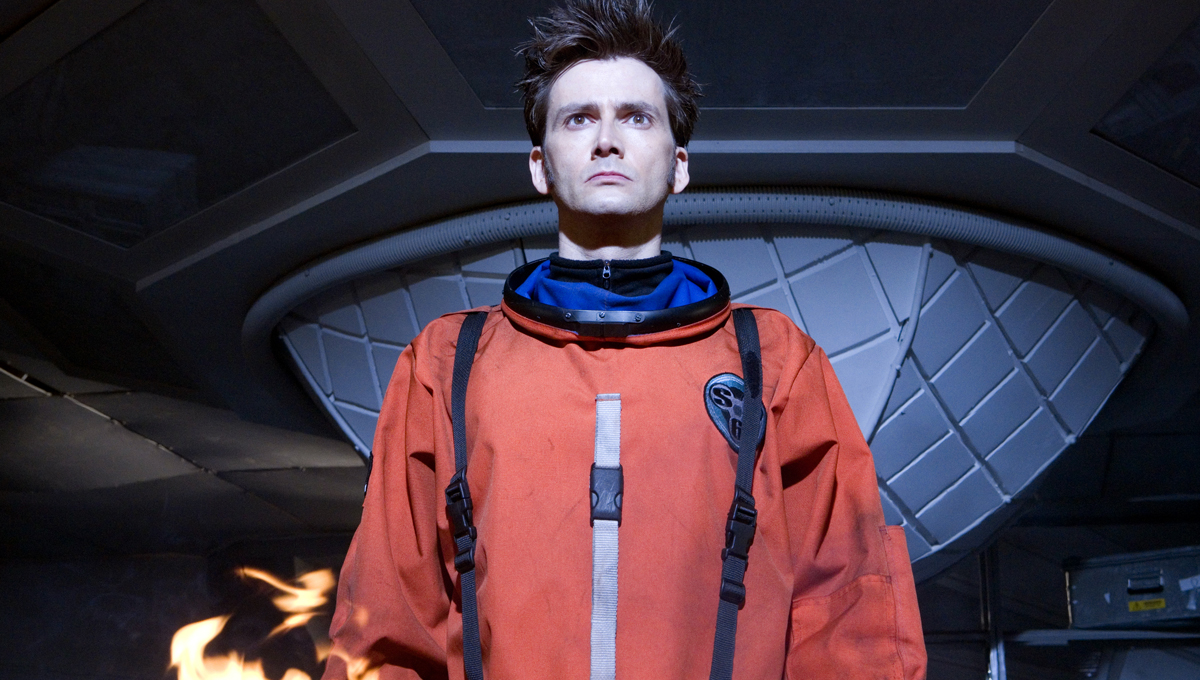
And you will see plenty of these examples in ‘The Waters of Mars.’ There is the long, lingering close-up on the Doctor’s face towards the end of the episode, right after (spoilers) Adelaide Brooke shoots herself, as he grimaces in anguish. Then there are the fast tracking shots as the Doctor and Adelaide race down the long, dark passages of Bowie Base One, pursued by the Flood. Then there are the intense, low-angle shots like when the Doctor rises on the Martian surface, surrounded by flames, as a disembodied voice reminds us that he’s “not just a Time Lord.”
Often, though, a director is only as good as their script, and fortunately ‘The Waters of Mars’ has a good one. This particular story is co-written by Russell T Davies and Phil Ford, and is a great example (if not a perfect example) of the ‘base under siege’ format which has been used many times over the years, to varying degrees of success.
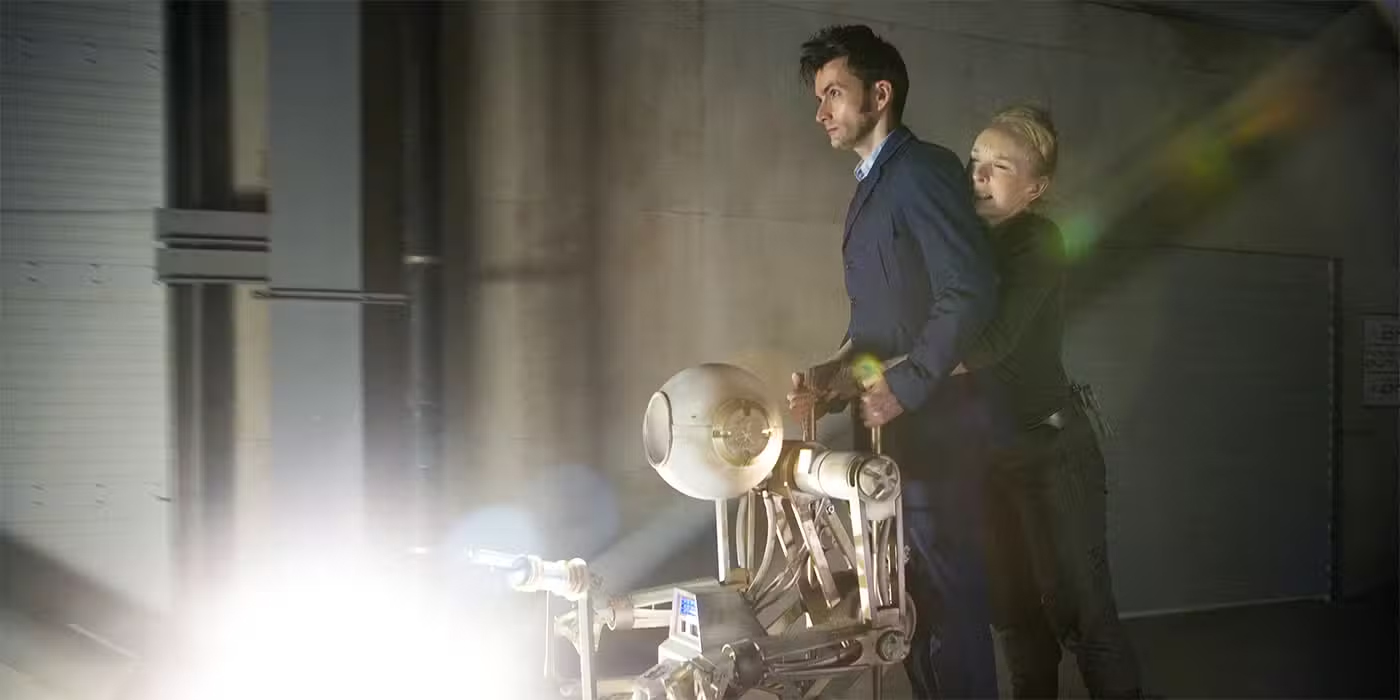
This particular format works best when the base’s occupants are trapped and isolated, a bit like the passengers in Agatha Christie’s Murder on the Orient Express, or the scientists in 1977’s ‘The Robots of Death.’ In ‘The Waters of Mars,’ as the title suggests, the crew are contained to the planet’s surface. They are the first off-world humans in history. Reaching the Martian surface wasn’t easy, and whilst they have an escape rocket ready to go, it’s no TARDIS; this is a NASA-style, fuel-burning projectile. If they use it, they’re not coming back.
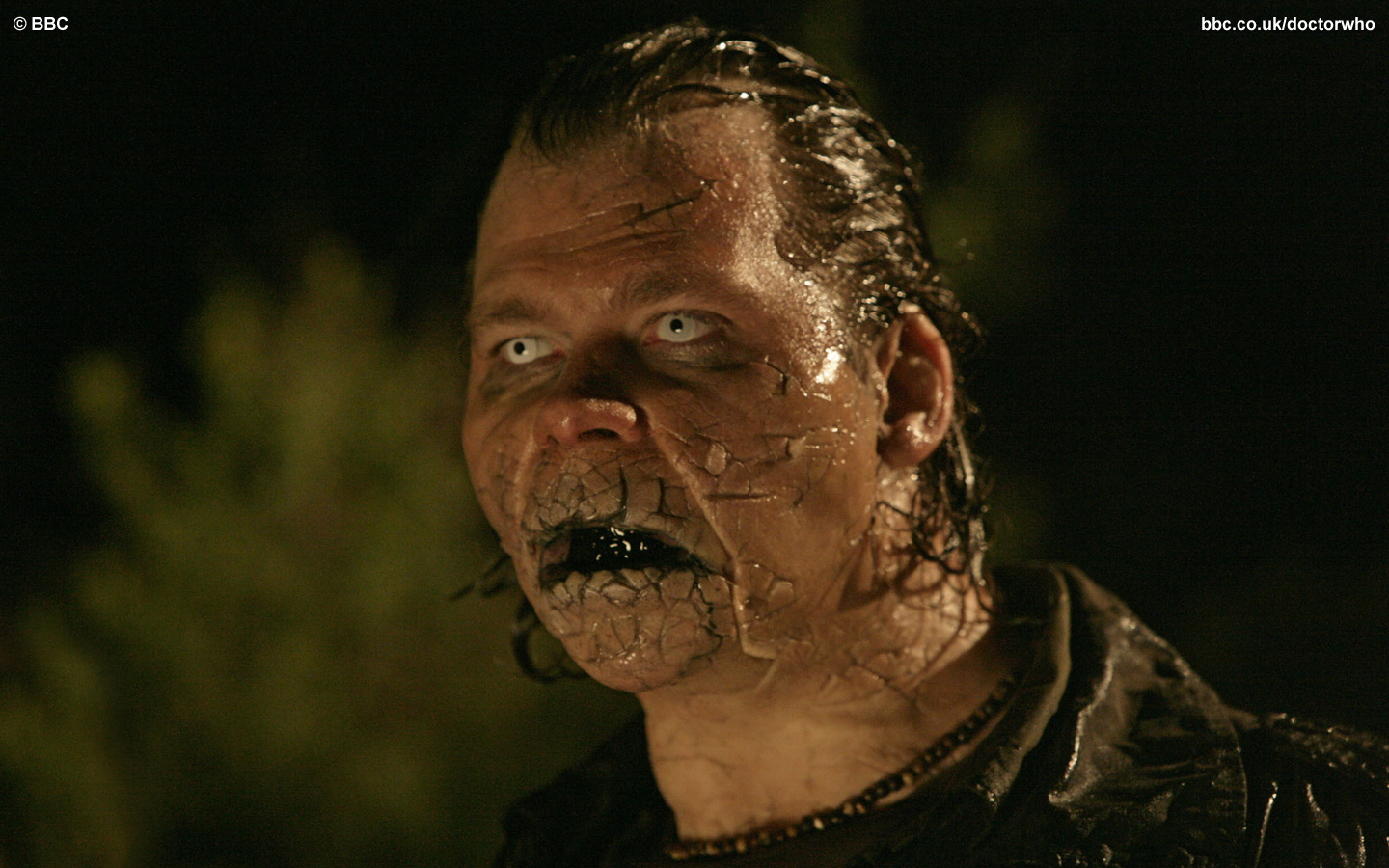
And in ‘The Waters of Mars,’ they are forced to use it. The situation becomes so desperate that the crew have no choice but to evacuate. But in so doing, the rocket gets infected by the Flood, and the pilot is forced to hit the self-destruct, stranding his companions on Mars. The events in ‘The Waters of Mars’ escalate rapidly; every time the characters try to save themselves, they inch ever closer to their fate.
And it is ‘fate’ in this instance. Throughout the episode, the Doctor (and the audience) knows that the inhabitants of Bowie Base One are destined to die on that very day. They know that something will cause Captain Adelaide Brooke to detonate the nuclear device and destroy the base completely, killing herself and her crew, but they don’t know what. This plot point underpins the entire story, ramping up the tension every time the characters have a crisis. It’s like watching Jack and Rose waiting for the Titanic to sink.
And then there is the music. There is nothing subtle about Murray Gold‘s score for ‘The Waters of Mars.’ On a scale of one to 10 (10 being dramatic) ‘The Waters of Mars’ is an 11. The audience is pummelled with ‘Flavia’s ethereal tones as the Time Lord walks, in slow motion, away from the base’s dying crewmates, listening to their death throes over the comms. Subtle it is not.
And then there is the wonderfully haunting ‘Vale’ song from the Ood, sung as if carried on the wind as the Time Lord recognises his hubris and seeks to run from his own death. Tonally, it’s a tough one to describe – somewhere between sad and foreboding, mournful and terrifying. It’s one of Murray Gold’s most powerful compositions, and acts as a precursor to the Time Lord’s regeneration theme ‘Vale Decem.’
As such, ‘The Waters of Mars’ is not an easy episode to forget; it’s like it demands to be felt. And yet, remarkably, it is one that is seldom mentioned. Whilst ‘Blink’ and ‘Heaven Sent‘ are frequently discussed, rewatched and praised, ‘The Waters of Mars’ often slips under the radar. This is odd. It’s staggeringly underrated, and not in the way that obscurities like ‘Planet of Fire‘ can be ‘underrated.’ For some people, ‘The Waters of Mars’ is the closest thing to a masterpiece that New Who has every seen, and it’s a tough episode to fault. (“Gadget, Gadget.”)
This is all subjective, of course. Everyone has their own ideas about what makes a good Doctor Who episode. So tell us, reader: how do you feel about ‘The Waters of Mars’? Let us know in the comments below.


Leave a Reply